
Where Should You Start With a Plumbing Repair?
For a plumbing repair, start with the symptom: a running toilet may need a new flapper, a slow sink may need its trap cleared, and weak flow at one faucet may point to a clogged aerator. If a leak is hidden, several drains back up, or a water heater is failing, have a plumber diagnose the problem before you attempt a repair.
I’m Michael Petitt, owner of Petitt Heating & Cooling. I’ve worked in HVAC for over 30 years, and I’ll help you understand which plumbing repairs you can handle, when to call a plumber, and how to keep common problems from coming back.
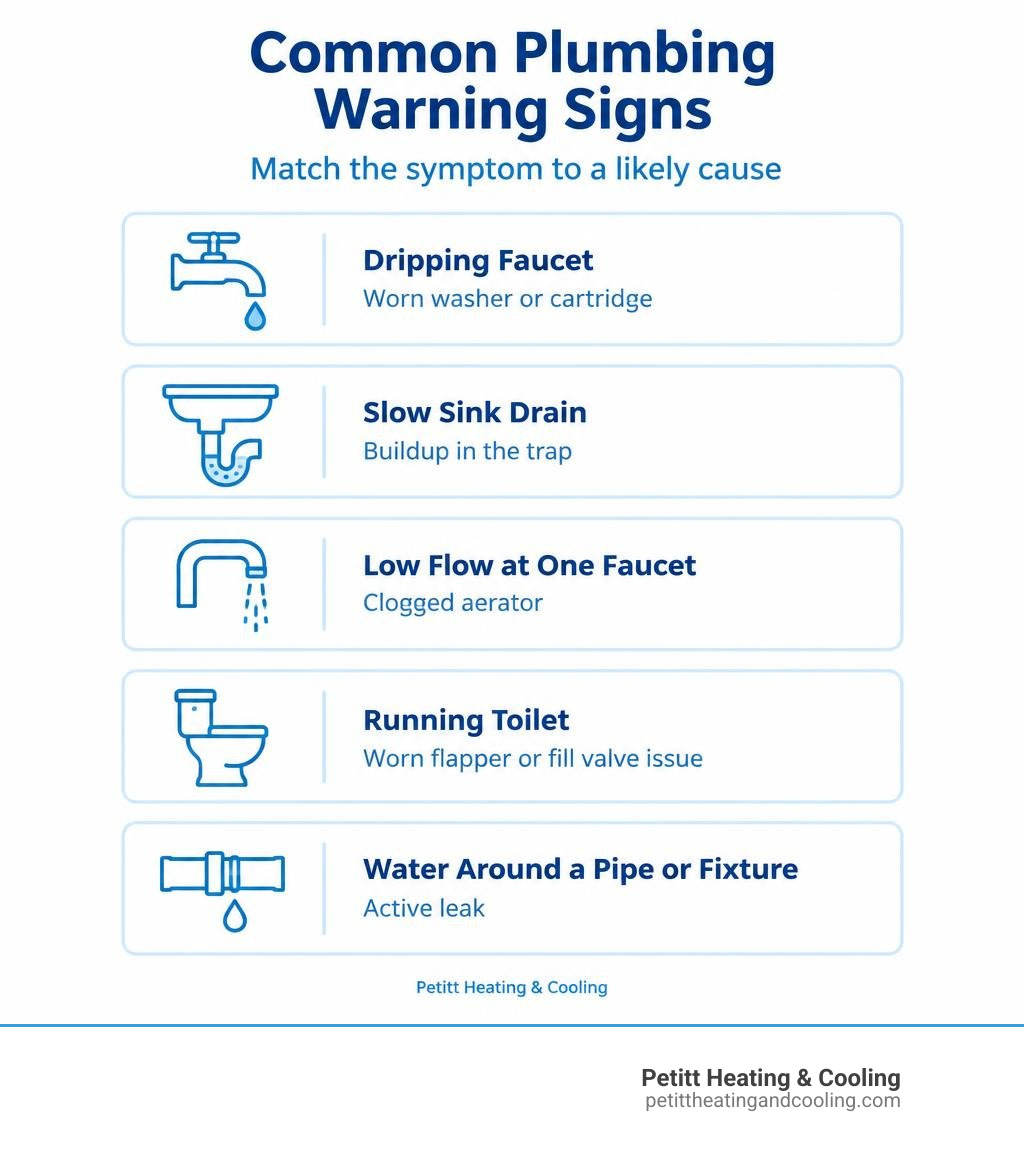
Quick Answer: What Are the Most Common Types of Plumbing Repairs?
The most common types of residential plumbing repairs involve fixing dripping faucets, replacing faulty toilet components, clearing slow-draining sinks, restoring low fixture water pressure, and servicing aging water heaters. Most surface issues stem from worn-out rubber seals, mineral sediment buildup, or mechanical clogs. When an active leak threatens your living space, locating and turning your main water shutoff valve clockwise immediately stops the flow while you evaluate the repair.
Common Household Plumbing Problems and Warning Signs
Residential plumbing systems work silently behind drywall and beneath flooring, bringing clean pressurized water into fixtures and carrying wastewater away. Because much of the system remains out of sight, everyday wear and tear often starts with subtle clues before escalating into noticeable property damage.
Dripping faucets and running toilets waste thousands of gallons of water annually. Beyond the annoying sound of trickling water, continuous leaks elevate your monthly utility costs. If you notice a sudden jump on your statement without a change in household usage, it pays to investigate why did my water bill go up. Unseen leaks inside toilet tanks or under subfloors often explain unexpected billing spikes.
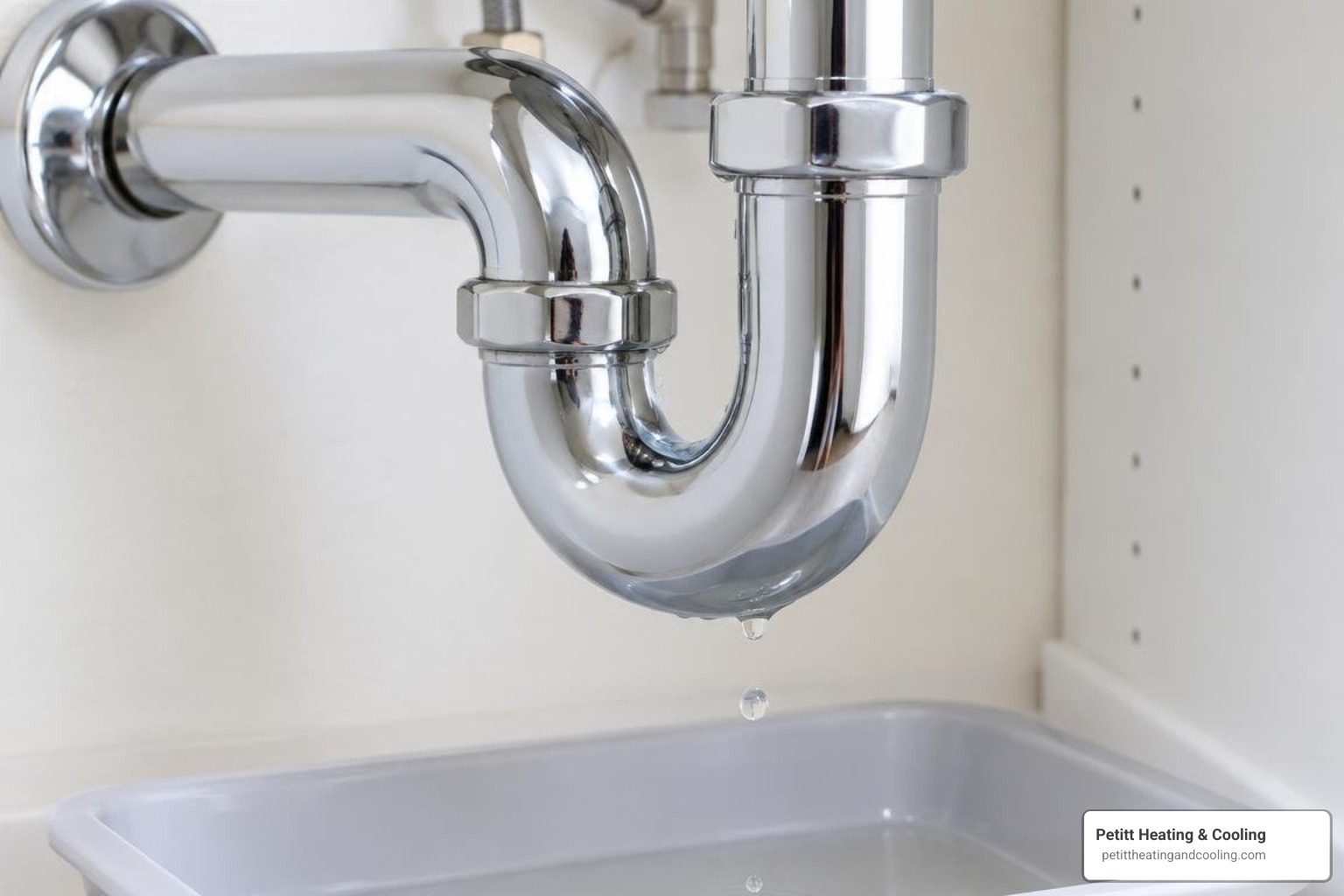
Recognizing Hidden Leaks and Pressure Drops
Hidden water leaks represent some of the most destructive plumbing issues because they slowly degrade structural framing, ruin drywall, and encourage mold growth. Common warning signs include discolored wall patches, musty odors in enclosed rooms, warm spots on tile floors, and unprompted drops in household water pressure.
When water volume drops at a single faucet, the issue is usually localized to an aerator. However, if pressure drops across multiple fixtures at once, review common low water pressure causes, such as a failing pressure-reducing valve or corrosion inside the line.
Hidden supply-pipe problems behind finished walls often require acoustic listening tools and moisture mapping to avoid unnecessary demolition. If you suspect an active supply leak, schedule professional pipe and leak repair to help protect your home from long-term water damage and rot.
Drain Blockages and Fixture Backups
Drain clogs build up gradually over weeks or months. In bathrooms, soap scum binds with loose hair to create dense obstructions inside fixture traps. In the kitchen, cooking fats, food scraps, and fibrous vegetables cause frequent blockages. If your kitchen sink keeps clogging, grease coating the inner pipe walls is frequently the primary culprit.
When multiple fixtures drain slowly or water bubbles up into tubs when you run a washing machine, ask yourself: why is my drain backing up? Multiple fixture backups point to an obstruction deep within the main drain line rather than a simple sink clog.
While it might be tempting to pour store-bought liquid cleaners into sluggish pipes, learning that drain cleaner can damage pipes is critical. Caustic chemicals generate exothermic heat that softens PVC joints, corrodes older metal plumbing, and leaves toxic chemical pools that pose severe hazards to technicians performing physical drain snaking.
DIY vs. Professional Plumbing Repair: Knowing When to Call an Expert
Understanding your mechanical limits keeps home repairs safe, affordable, and compliant with local municipal codes. Minor surface maintenance is often well within reach of a handy homeowner, but knowing when to call a plumber prevents small fixture fixes from turning into accidental water damage.
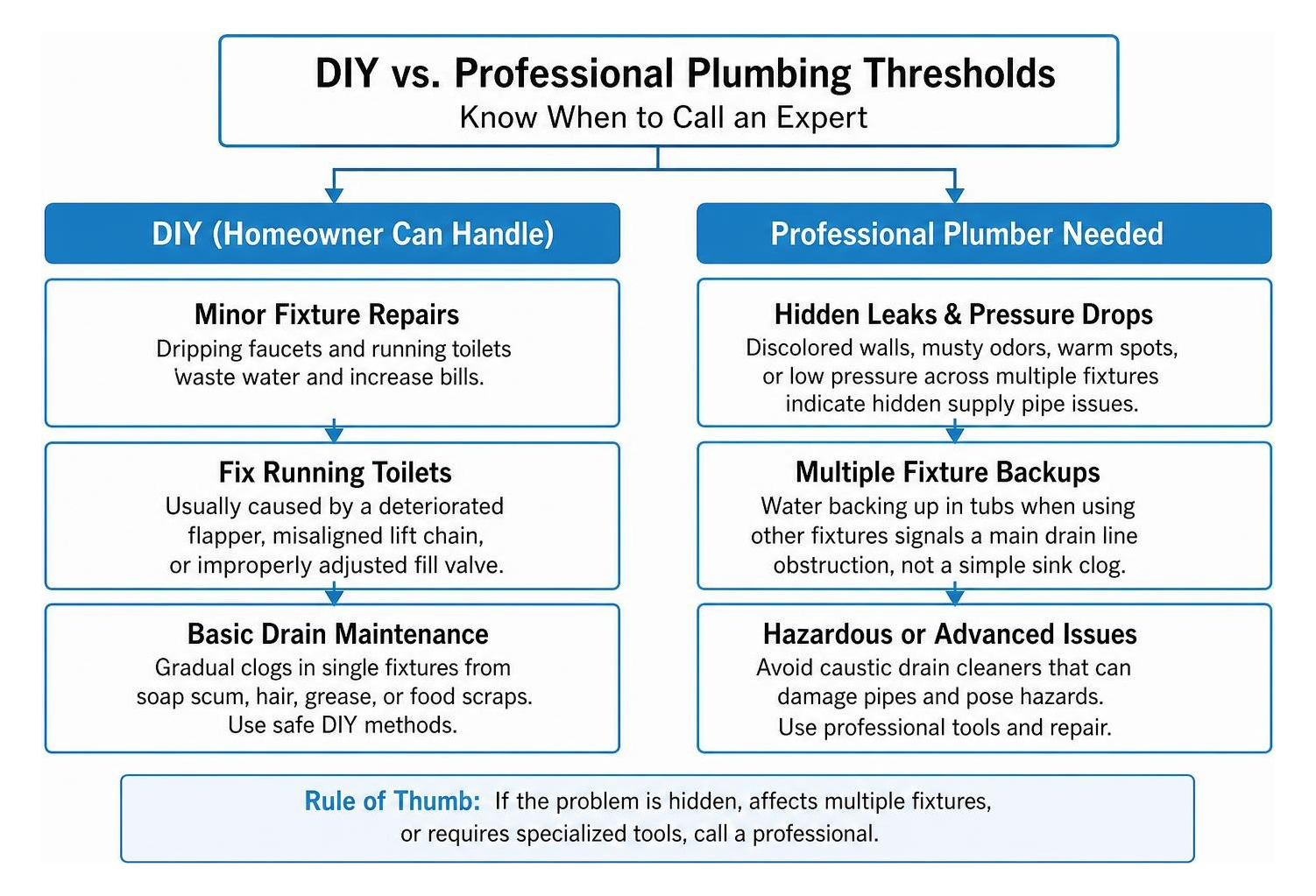
Minor Plumbing Repair Projects Homeowners Can DIY
Homeowners can safely tackle several straightforward plumbing tasks with a few basic tools and replacement parts from the local hardware store.
- Fixing running toilets: A toilet that runs constantly usually has a deteriorated flapper, a misaligned lift chain, or an improperly adjusted fill valve. Reviewing common toilet leaks and DIY fixes allows you to swap out internal tank components in under thirty minutes.
- Cleaning aerators: Unscrewing the small aerator screen on the tip of your bathroom or kitchen spout and soaking it in distilled white vinegar dissolves mineral scale and restores full water stream velocity.
- Clearing the sink P-trap: Placing a small catch bucket beneath a sink, unscrewing the slip nuts by hand or with channel locks, and emptying physical hair and soap debris physically clears slow drains without damaging pipe walls.
Every homeowner benefits from keeping a dedicated plumbing kit on hand containing:
- Adjustable slip-joint pliers (channel locks)
- Basin wrench for hard-to-reach faucet nuts
- Flanged toilet plunger and standard flat sink plunger
- Hand-crank drain auger (snake)
- Teflon thread-seal tape and silicone plumber’s grease
When to Hire a Licensed Plumber
Major plumbing tasks often require specialized licensing, insurance coverage, and compliance with local building codes. When choosing a contractor, verify their licensing credentials with your state licensing board.
A Master Plumber license reflects advanced training and diagnostic experience. General liability insurance also helps protect you if property damage occurs during a complex repair.
For qualifying low-income homeowners dealing with essential system breakdowns, public repair programs aligned with HUD low-income assistance guidelines may offer financial assistance for basic water utility and fixture repairs.
Water Heaters, Piping, and Sewer Lines: Choosing the Right Solutions
Your home’s core plumbing infrastructure includes hot water generation, water distribution lines, and wastewater drainage. Updating worn equipment with modern fixture services improves overall household efficiency and reduces utility waste.
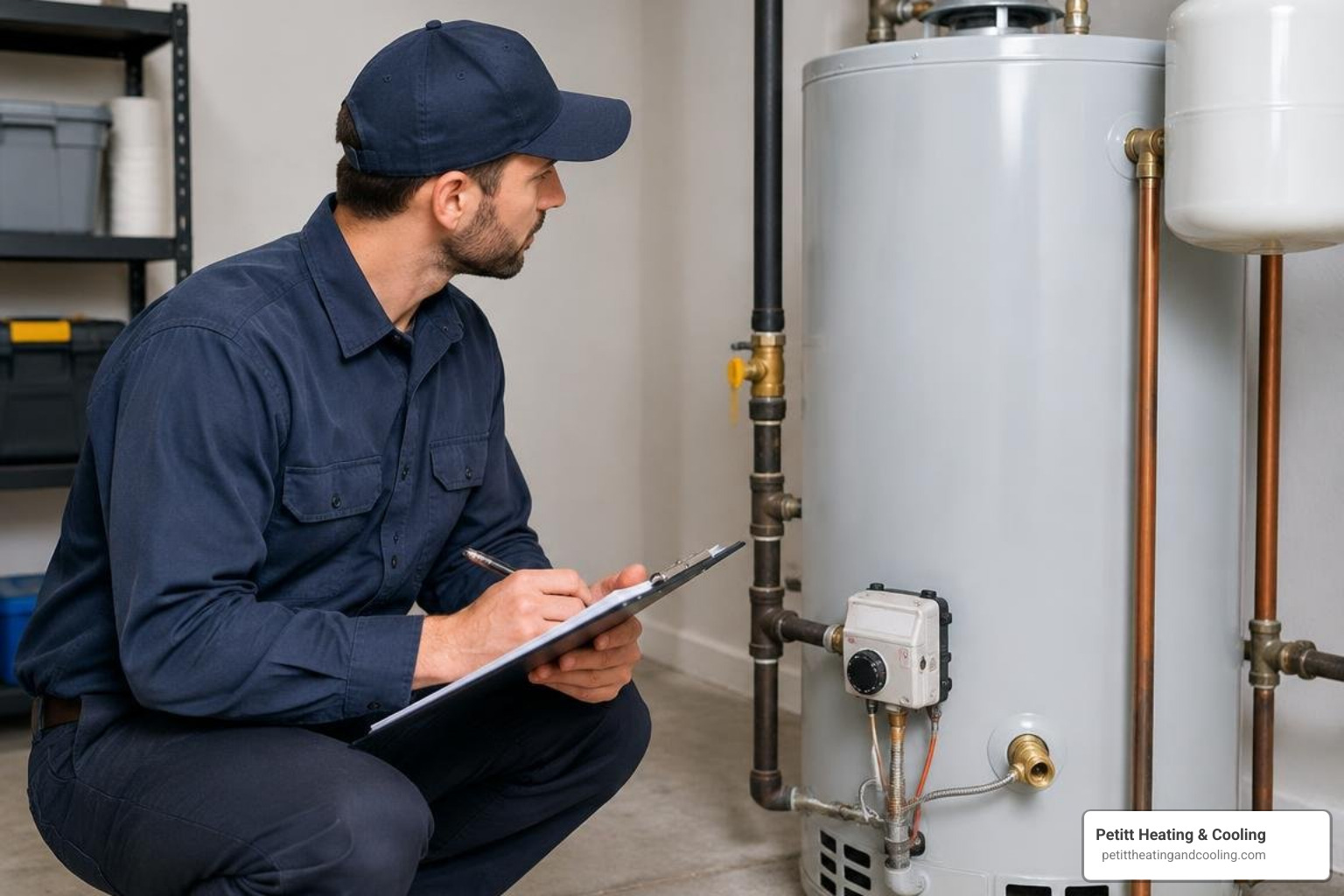
Tank vs. Tankless Water Heater Replacement
According to the U.S. Department of Energy, water heating accounts for 14% to 18% of an average home’s total energy expenses. Standard storage tank water heaters generally have an operational lifespan of 8 to 12 years. As they age, sediment settles on the tank floor, insulating the water from the heating element, reducing efficiency, and eventually causing the steel tank to crack.
Choosing between a standard tank vs tankless water heater comes down to your household hot water demand, available space, and budget. Exploring professional water heater services ensures your system is sized properly for your home.
| Feature | Storage Tank Water Heater | Tankless Water Heater |
|---|---|---|
| Typical Lifespan | 8 to 12 Years | 20+ Years |
| Energy Efficiency | Moderate (Standby heat loss occurs) | High (Heats on demand only) |
| Upfront Equipment Cost | Lower initial investment | Higher initial investment |
| Hot Water Supply | Limited to tank capacity (40–80 gal) | Continuous flow rate |
| Space Requirement | Large floor footprint | Compact wall-mounted unit |
Pipe Materials and Residential Repiping
Older homes often feature legacy piping materials that degrade over decades. Identifying the pipe materials in your home helps you plan future plumbing repair or whole-home repiping projects.
| Material | Primary Application | Key Advantages | Disadvantages |
|---|---|---|---|
| Copper | Water Supply Lines | Rigid, durable, resists bacterial growth, 50+ year lifespan | Higher material cost; susceptible to pinhole leaks in acidic water |
| PEX (Cross-linked Polyethylene) | Water Supply Lines | Flexible, fewer fittings required, resists scale, cost-effective | Cannot be used outdoors exposed to UV light |
| PVC (Polyvinyl Chloride) | Drain, Waste, & Vent | Smooth interior prevents clogs, will not rust or rot | Rigid; not rated for pressurized indoor hot water distribution |
| CPVC (Chlorinated PVC) | Water Supply Lines | Handles higher temperatures than standard PVC, easy to install | Can become brittle after decades of hot water exposure |
Advanced Pipe and Sewer Plumbing Repair Options
Sewer lines carry all household waste to the municipal main or private septic system. When underground lines crack or become misaligned due to shifting soil or invasive tree roots, you may notice foul sewage odors in the yard, soggy lawn patches, or recurring gurgling sounds from lowest-level drains.
Modern diagnostic sewer services utilize high-resolution video camera inspections. A flexible fiber-optic camera snakes directly through the pipe cleanout to pinpoint the exact location and nature of the obstruction without excavating your lawn. From there, techniques like hydro-jetting scour away heavy grease and roots, while trenchless pipe lining can structurally restore damaged sewer lines from the inside out.
Preventative Plumbing Maintenance to Protect Your Home
Routine maintenance prevents unexpected emergency repair calls, extends appliance lifespans, and maintains optimal water quality. Scheduling periodic plumbing maintenance catches minor gasket degradation, valve stiffness, and slow drainage before major failures occur.
As colder weather arrives, check outdoor hose bibs, disconnect garden hoses before freezing temperatures set in, inspect washing machine hoses and exposed crawlspace pipes for leaks or missing insulation, and test sump pump floats.
Managing Hard Water and Mineral Buildup
Hard water contains elevated concentrations of dissolved minerals, primarily calcium and magnesium. As documented by the United States Geological Survey, hard water scale precipitates out of solution when heated, coating the internal heating elements of dishwashers, washing machines, and water heaters.
Over time, heavy scale accumulation restricts water flow inside distribution pipes and accelerates appliance breakdowns. Learning how hard water impacts appliances highlights the value of annual water heater flushing to clear sediment. Installing whole-home water softeners or scale-reduction filtration through water quality services protects your plumbing lines and fixtures from premature wear.
Winterizing Pipes and Main Shutoff Protocols
During freezing winter weather, water trapped inside uninsulated exterior pipes can freeze and expand. Frozen water inside a sealed pipe can generate internal hydrostatic pressures reaching up to 25,000 PSI, easily splitting copper or plastic lines.
To safeguard your home against winter pipe bursts:
- Insulate exposed pipes located in unheated crawlspaces, basements, and exterior walls with closed-cell foam sleeves.
- Disconnect, drain, and store all outdoor garden hoses before the first freeze, and close internal shutoff valves servicing outdoor spigots.
- Allow faucets serviced by exterior-wall plumbing to maintain a slight, continuous drip overnight during extreme freezes to relieve internal pressure build-up.
- Review safety protocols for frozen pipes before cold weather sets in.
Every person in your household should know the location of your main water shutoff valve. Typically located near the water meter, inside a front basement wall, or in a utility closet, turning this valve clockwise completely isolates your home from incoming water pressure, preventing catastrophic flooding during an unexpected pipe burst.
Frequently Asked Questions About Plumbing Repair
Does homeowners insurance cover plumbing repairs?
Coverage depends on your specific insurance policy terms. Standard homeowners insurance generally covers sudden and accidental water damage—such as an unexpected pipe burst—but typically excludes damage caused by gradual leaks, deferred maintenance, or general wear and tear.
How much does plumbing repair cost?
The total cost of a plumbing repair depends on the type of problem, pipe accessibility, parts required, and the labor involved. Simple fixture part replacements cost substantially less than underground sewer or slab repairs. A licensed technician evaluates the system in person to give you an accurate written estimate before starting work.
How long does a plumbing repair take?
Repair timelines vary based on the scope and complexity of the job. Replacing a toilet flapper, clearing a standard sink trap, or swapping a faucet cartridge usually takes one to two hours, whereas whole-home repiping or trenchless sewer repair can take several days.
Can a small plumbing leak wait to be repaired?
No. Even a tiny pinhole leak or steady faucet drip can waste hundreds of gallons of water, rot surrounding wood framing, and encourage hidden mold growth. Addressing leaks immediately prevents costly property restoration down the road.
Will a plumber need to open a wall to repair a leak?
Not necessarily. Plumbers use non-invasive diagnostic tools such as thermal imaging cameras, moisture meters, and acoustic listening devices to pinpoint leaks. While accessing a damaged supply pipe inside a wall requires cutting an access opening, precise diagnostics keep wall cuts as small as possible.
Conclusion
Caring for your home’s plumbing system requires a balanced approach: paying attention to early warning signs, performing routine seasonal maintenance, and knowing your limits when it comes to DIY fixes. Addressing minor issues like dripping faucets, slow drains, and mineral buildup early helps you avoid extensive water damage and ensures your home runs efficiently.
When you need dependable, high-quality diagnostic assistance or system upgrades, our team at Petitt Heating & Cooling is here to help. You can easily request an appointment with our licensed professionals or explore our full range of comprehensive plumbing services to keep your home’s water systems operating smoothly year-round.