
A quality heat pump installation service can help lower energy use while keeping your home comfortable in every season, but the system has to fit the house and be installed the right way. At Petitt Heating & Cooling, that means starting with a room-by-room load calculation, explaining the equipment and electrical work in writing, and testing the system after installation.
I’m Michael Petitt, owner of Petitt Heating & Cooling, with more than 30 years of HVAC experience, and I put together this guide to help you sort through the choices ahead, from comparing system types to knowing what a careful installation should include. Let’s walk through the practical details so you can ask the right questions and feel confident about the next step.
Quick Answer: What to Look for in a Heat Pump Installation
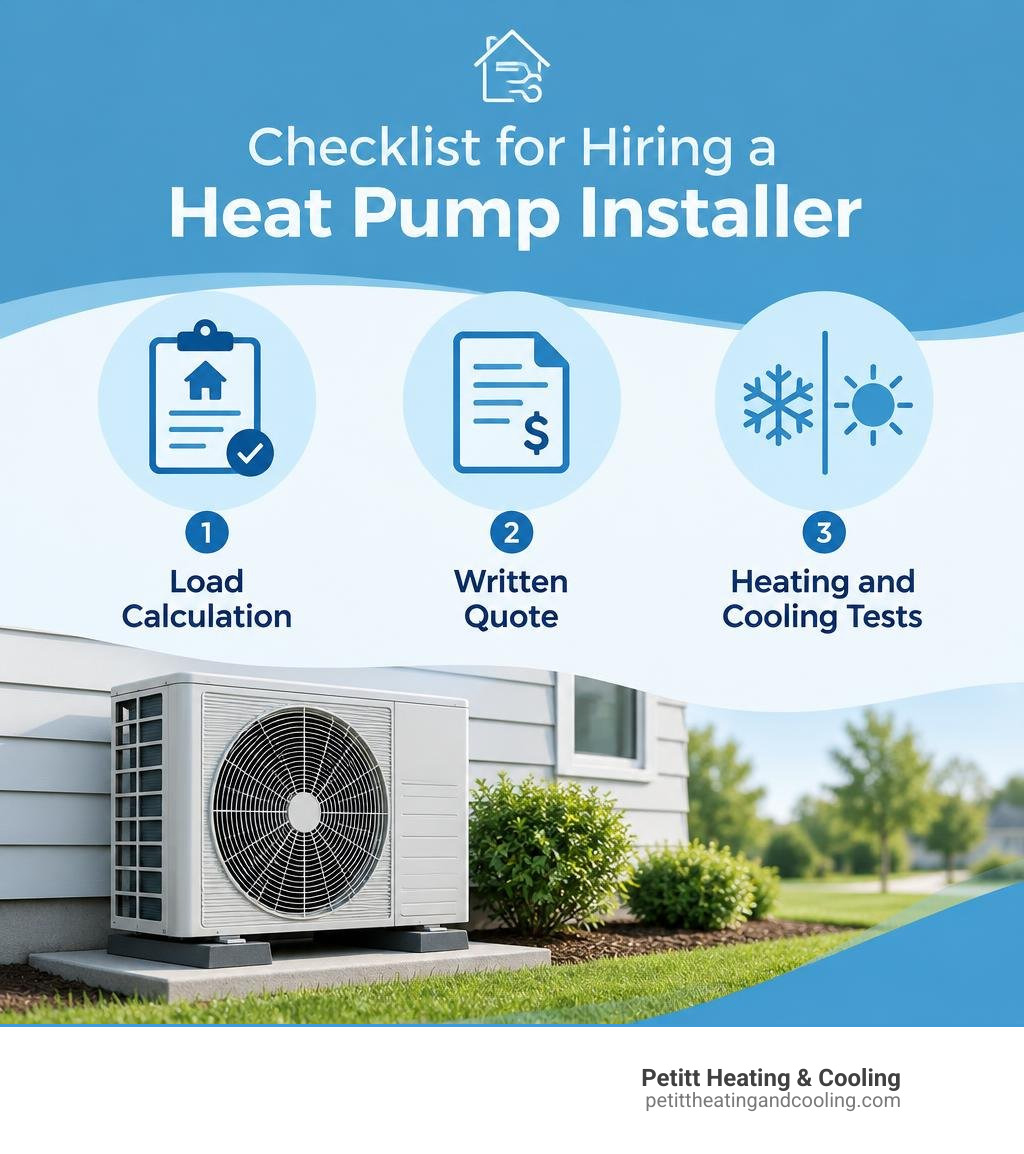
A dependable installation starts with a room-by-room load calculation to match equipment capacity directly to your home. Make sure your contractor provides a clear written quote detailing all electrical and ductwork needs before starting. Finally, verify that the crew performs complete heating and cooling commissioning tests before wrapping up the job.
How Modern Heat Pumps Deliver Efficient Year-Round Comfort
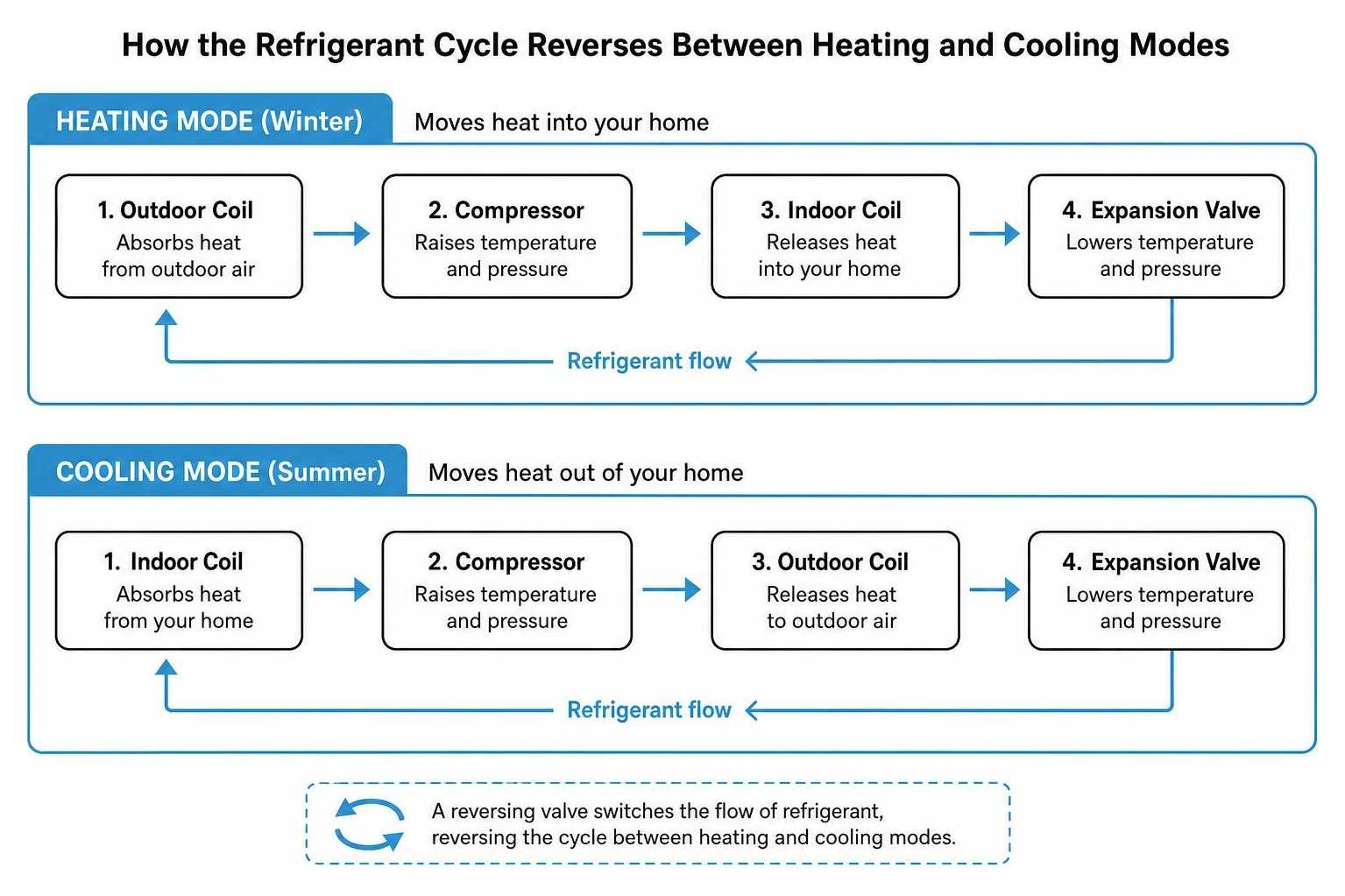
A heat pump doesn’t create warmth by burning fuel. It gathers available heat from the outdoor air and brings it inside, even when the weather feels cold. That heat-moving process is what helps a properly sized system keep the home comfortable through winter.
When summer arrives, the system flips the direction of the refrigerant with a reversing valve. Rather than bringing heat indoors, it carries heat out of the house, much like central air conditioning. The U.S. Department of Energy says an energy-efficient heat pump can use up to 50 percent less electricity for heating than electric resistance equipment, including baseboard heaters and electric furnaces. Your real-world savings will depend on the home, weather, electric rates, and the system being replaced.
Many newer heat pumps use variable-speed compressors, which can ease up or work harder as your home needs change. Instead of constantly switching fully on and off, they make smaller adjustments that can help rooms feel more even. When comparing models, ask about SEER2 for cooling and HSPF2 for heating, then have the contractor explain what those ratings mean for your home and climate.
Operating Differences: Heat Pumps vs. Traditional Furnaces and AC Units
Older setups often use one piece of equipment for winter and another for summer. A heat pump takes on both roles in the same system, so you have one setup handling heating and cooling as the seasons change. That can mean less equipment to keep up with and more usable space around the home.
A furnace tends to run in stronger bursts, which can leave some rooms warmer or cooler than others. Heat pumps usually run more steadily, sending gentler conditioned air through the home for longer stretches. In very cold weather, some systems use electric backup heat to lend a hand. How well that works still comes down to the equipment, installation quality, insulation, and the conditions outside.
Comparing Heat Pump System Types for Your Home

No two homes are laid out quite the same, so the right heat pump setup depends on your insulation, ductwork, and the rooms you want to heat and cool. Existing ducts may point toward a central system, while a hard-to-condition room or new addition may be a better fit for a ductless unit. Looking at those details early helps avoid an expensive guess.
| System Type | Efficiency Range | Typical Install Time | Best Suited For |
|---|---|---|---|
| Central Ducted Heat Pump | 15.2 to 22+ SEER2 | 1 to 2 Days | Homes with existing, well-sealed ductwork |
| Ductless Mini-Split | Up to 25+ SEER2 | 1 Day | Room additions, older homes, or targeted zoning |
Central Ducted Heat Pumps
Central systems pair an outdoor unit with an indoor air handler that moves conditioned air through your existing ducts. Before starting a heating installation, a technician must inspect duct static pressure and verify duct integrity. When the ducts are in good shape, this can be a practical way to update comfort throughout the house without opening up interior walls. Your installer can give you a realistic timeline after checking the equipment, ductwork, and electrical needs.
Ductless Mini-Split Systems
If your home lacks ductwork or has rooms that stay uncomfortable, a ductless installation offers an adaptable alternative. These systems connect one outdoor unit to one or more wall-mounted indoor air handlers. A U.S. Department of Energy report notes that ductless systems avoid the losses that can happen in poorly sealed or uninsulated ducts. Each indoor unit can be adjusted separately, which is useful when different rooms need different comfort settings.
What to Expect from a Professional Heat Pump Installation Service
A good installation starts with measurements, not a quick guess based on square footage. Professional contractors often use standards from the Air Conditioning Contractors of America to ensure optimal performance. These steps help match the equipment to your home’s heat loss, cooling needs, and airflow:
- Manual J: Calculates the exact heating and cooling loads of your house.
- Manual S: Selects equipment with certified performance capacities matching those loads.
- Manual D: Evaluates duct static pressure and airflow distribution.
Your installer should also look at the main electrical panel before work begins. Because a heat pump runs on electricity, the home may need a dedicated circuit or a panel upgrade. Checking that early helps prevent surprises once installation is underway.
Steps in a Complete Heat Pump Installation Service
A typical residential installation follows a clear sequence so the new system is set up safely and works as it should. The crew should explain what’s happening at each stage and answer questions before they leave. Here’s what a complete visit often includes:
- Prepare the work area: The crew clears the space and handles any old refrigerant according to applicable environmental requirements.
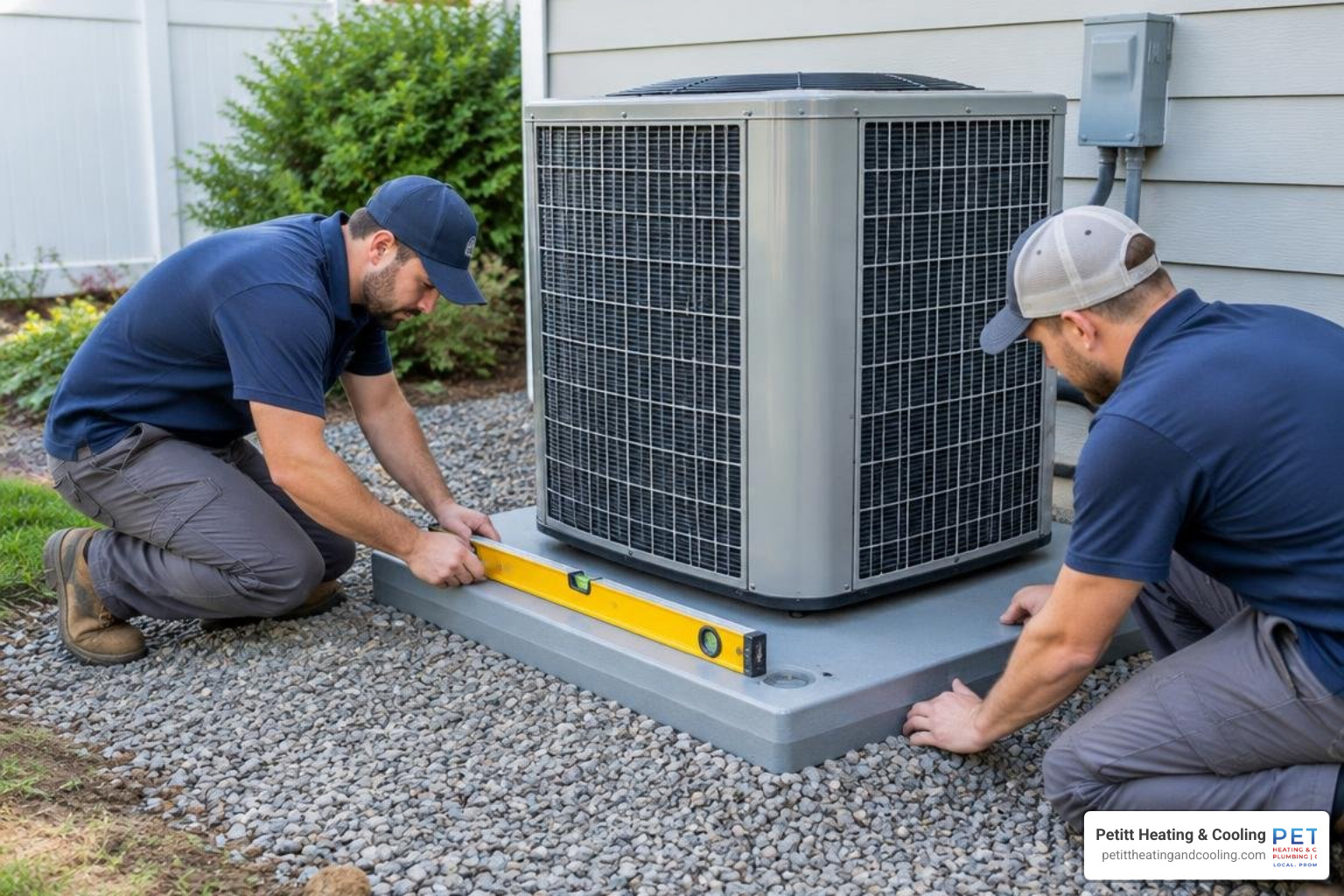
- Set the equipment in place: They level the outdoor pad, install the indoor equipment, and complete the electrical connections.
- Connect the refrigerant lines: The lines are joined carefully, with dry nitrogen used during brazing when needed and fittings tightened to the manufacturer’s specifications.
- Test the sealed system: Before startup, the team checks the lines for leaks and removes moisture with a deep vacuum.
- Start up and walk you through it: The technician tests heating and cooling, sets up the thermostat, and explains how to use the new system.
Avoiding Common Mistakes During Installation
Installation shortcuts can hurt comfort and raise operating costs. For example, an oversized unit may turn on and off too often, leaving humidity problems behind and putting extra wear on the equipment. A proper load calculation gives you a much better chance of getting the right fit from the start.
Small details matter, too. Skipping proper refrigerant-line practices or failing to verify the refrigerant charge can lead to performance problems later. A level pad, vibration control, and clear condensate drainage also help the system run quietly and protect the home from moisture issues.
Heat Pump Costs, Incentives, and Return on Investment
Heat pump installation costs vary widely based on the equipment, the home’s size, ductwork changes, and electrical work. A written, itemized estimate makes it easier to see what is included and compare options. Higher-efficiency equipment may cost more up front, but it can reduce energy use when it is properly sized and installed.
Homeowners can also take advantage of flexible financing options to spread project costs into manageable monthly payments. The federal Energy Efficient Home Improvement Credit previously offered up to $2,000 annually for qualifying heat pumps, but the IRS says that this credit applied to eligible improvements placed in service through December 31, 2025. Review the IRS guidance for historical eligibility details, and check with your installer or a qualified tax professional about any current local utility rebates or tax rules before purchasing.
When to Repair vs. Replace Your Heating and Cooling Equipment
Deciding whether to repair an existing system or invest in a new one comes down to age, reliability, and cost. Knowing the signs you need to replace your HVAC system helps you avoid sinking money into failing equipment. If your unit is over a decade old and requires frequent service calls, upgrading often provides better peace of mind.
A practical guideline is the 50 percent rule: if an out-of-warranty repair costs half as much as a new unit, replacement is usually the smarter financial move. Routine upkeep through seasonal maintenance plans protects new equipment once installed. Regular service visits help a well-installed heat pump run smoothly for its full 15-to-20-year expected lifespan.
Choosing the Right Contractor for Your Installation
The installer matters just as much as the equipment brand. Look for a licensed, insured HVAC company that takes the time to understand your home instead of pushing a quick sale. A little homework up front can make the whole project feel much more straightforward.
Before you commit, make sure the proposal includes:
- A written scope based on a Manual J load calculation, not a quick rule-of-thumb estimate.
- Clear pricing, permit guidance, and a list of the equipment and labor included.
- A record of the final system checks, including airflow, refrigerant charge, and electrical operation.
- Help with manufacturer warranty registration and an explanation of what the coverage includes.
Key Questions to Ask Your Heat Pump Installation Service Contractor
Before you sign, ask a few plain questions about how the contractor plans to size, install, and test the system. A solid installer should be comfortable walking you through the answers. These are a good place to start:
- Did you run a room-by-room Manual J calculation to select this system’s tonnage?
- What is this unit’s heating output and efficiency rating at low outdoor temperatures?
- Does my electrical panel have sufficient capacity, or do we need circuit upgrades?
- What specific commissioning tests do you run before handing the system over?
- How do you handle warranty registration and post-installation service?
Frequently Asked Questions About Heat Pump Installation
Can I keep my furnace and add a heat pump?
Often, yes. A dual-fuel setup lets the heat pump handle much of the heating in milder weather, while the furnace can take over when temperatures drop very low. Your installer should confirm that the existing equipment and controls can work together before recommending this approach.
When should I schedule heat pump service?
A good rule is to book a professional check before the heating season and another before cooling season. Those visits give a technician time to inspect electrical connections, clean key components, and spot small issues early. Between visits, follow the manufacturer’s guidance for cleaning or replacing filters.
Is old equipment removal included with installation?
It can be, but it should be spelled out in the written proposal. Ask whether the quote includes removing the old equipment, recovering refrigerant properly, and hauling away the components. Getting those details in writing helps avoid a last-minute surprise.
Is winter a bad time to install a heat pump?
Not necessarily. Installations can happen during winter, though snow, ice, or very low temperatures may affect the schedule. The crew will need to take the right precautions with the outdoor pad and refrigerant lines, so ask what weather conditions could change the timeline.
Schedule Your Heat Pump Installation Service Today
Upgrading to a modern heat pump gives your home reliable, energy-smart comfort in every season. If you are ready to explore your options with energy-efficient heat pumps, our team is here to help with clear answers and accurate sizing. We take pride in delivering dependable workmanship that keeps your home comfortable year-round.
Getting started with our team is simple and stress-free. Contact Petitt Heating & Cooling today to discuss your heating and cooling goals with our friendly technicians. We invite you to request an appointment for an in-home evaluation and a transparent installation estimate.