
An emergency plumber cost can feel hard to pin down when water is spreading, a drain is backing up, or a pipe has failed after hours. The most useful first step is to stop the immediate damage when it is safe, then get a clear estimate that separates the visit charge, labor, parts, and any restoration work. This guide walks through those decisions in the order most homeowners need to make them.
I’m Michael Petitt, and I lead the team at Petitt Heating & Cooling. My work in the home-services field has spanned more than three decades, including 15-plus years operating a local company. I wrote this guide to make the next steps clearer when a plumbing problem catches you off guard.
Emergency Plumber Cost: Quick Middle Tennessee Estimate
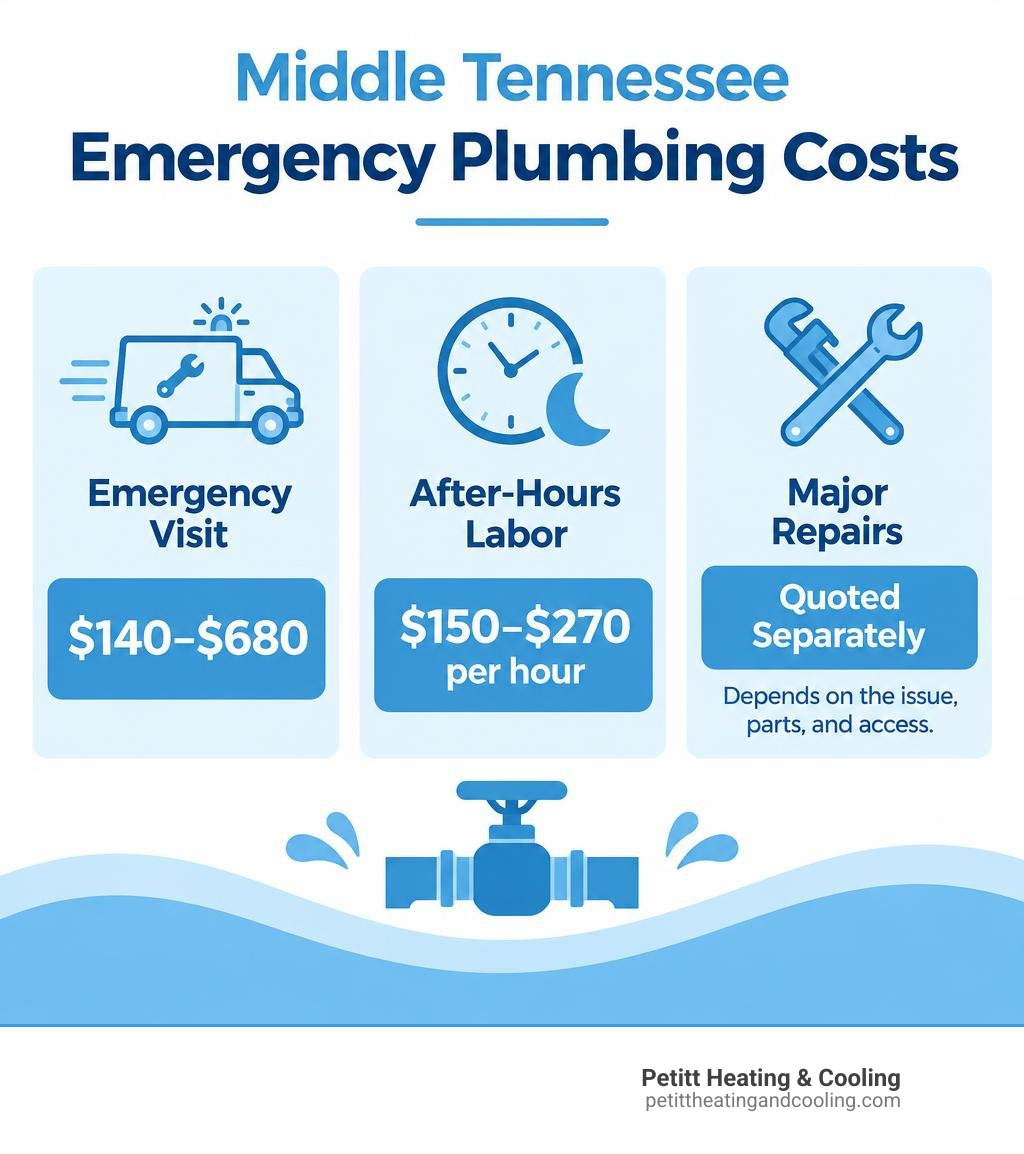
In Middle Tennessee, an after-hours plumbing call may start with an emergency-visit charge of roughly $140 to $680, while after-hours labor is often about $150 to $270 per hour. Those amounts cover the urgent response and on-site work, not necessarily the repair itself. Before authorizing service, request an itemized estimate that identifies the visit charge, labor, replacement materials, and any cleanup or restoration work separately.
Use these figures as local planning guidance, not a published rate sheet or a guaranteed quote. The final price can change with the time of the call, access to the problem, replacement parts, and any damage found after the technician begins the assessment.
If water is actively flooding the home, shut off the main water valve first if you can reach it safely. Then take photos for insurance, move valuables away from the water, and call for help. A quick description of the symptom, where it started, and whether the water is still running can help the technician arrive prepared.
What Makes an Emergency Plumbing Bill Go Up or Down?
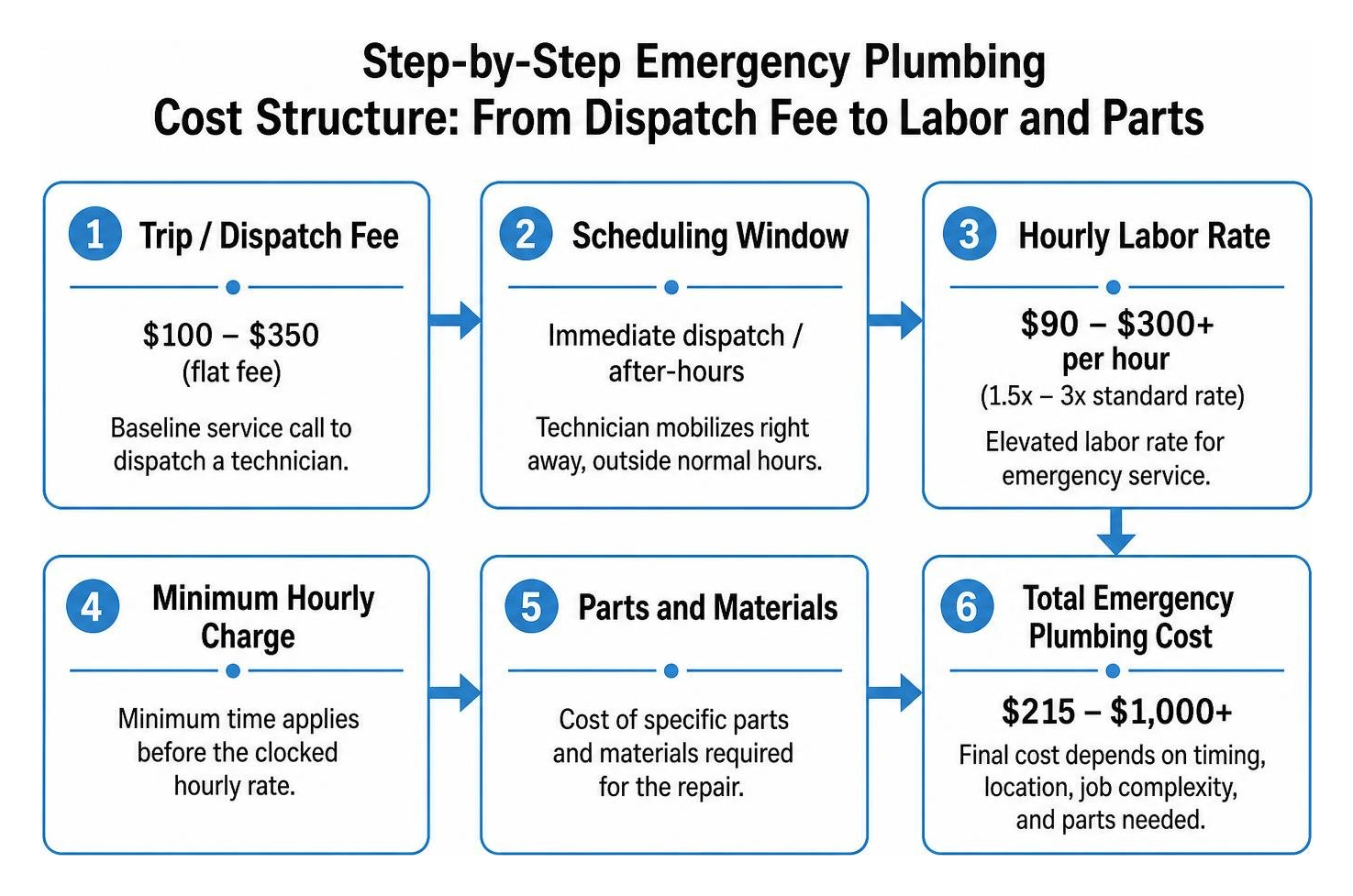
Once the immediate hazard is under control, the next question is why one emergency bill can differ so much from another. The visit itself covers rapid dispatch and an initial assessment, while labor, materials, access, and timing determine the rest. A simple repair at an exposed fixture is usually easier to price than a hidden leak, sewer problem, or issue behind finished walls.
A trustworthy emergency-plumbing quote explains the problem, the immediate safety step, and the work that may follow once the technician can see the full extent of the issue. In my experience, homeowners get better clarity when the estimate separates the work needed to stop active damage from optional or later repairs. Review the line items for the call-out, on-site labor, materials, and water-damage work, then ask which items must be completed today and which can be scheduled.
Timing, Access, and Repair Complexity
After-hours, weekend, and holiday calls can cost more because a technician must respond outside normal scheduling hours. The location of the problem matters too: a leaking valve under a sink is far more accessible than a broken line under a slab or inside a wall. Older piping, difficult shutoffs, specialty parts, and water damage can also add time and materials.
Before work starts, ask whether labor is billed hourly or in set increments and whether a minimum charge applies. Rates can also vary with access, travel, and the complexity of the property. These questions do not delay urgent work; they help prevent surprises once the immediate problem is contained.
How to Read an Emergency Plumbing Estimate
A written estimate may change if the technician finds concealed damage, but the reason for the change should be explained before additional work begins. For a major repair, ask for the safe-stop option, the complete repair option, and the risks of delaying each one. That turns a stressful conversation into a practical decision rather than a guess.
| Service Element | What It Covers | What to Ask |
|---|---|---|
| Dispatch or service-call fee | Travel and the initial evaluation | Is this fee credited toward the repair? |
| After-hours labor | Time spent diagnosing and repairing the issue | What is the hourly rate and minimum labor charge? |
| Parts and materials | Pipe, valves, fittings, equipment, or specialty items | Are parts priced separately and available today? |
| Additional restoration | Drying, wall access, flooring, or cleanup after a leak | Is this plumbing work or a separate service? |
Common Emergency Plumbing Problems and Their Cost Drivers
The problem itself has the biggest effect on the final invoice because it determines the time, tools, and access required. A stoppage close to a fixture may be resolved quickly, while a failed main line or hidden leak can require camera inspection, removal of materials, or replacement of damaged pipe. The goal of the first visit is to identify the source, stop active damage, and explain the repair path.
What the Repair May Involve
An online price range can help with budgeting, but the repair plan begins only after the source of the problem is located. A leak that appears minor can involve worn fittings, damaged surrounding materials, or piping hidden behind a wall or beneath a slab, each of which affects the work required. Addressing a leak promptly with pipe and leak repair can help limit additional water damage while the technician determines the right repair approach.
- Burst pipe: The price depends on whether the break is visible, how much pipe needs replacement, and whether water has damaged walls, floors, or insulation.
- Main-drain clog or sewer backup: The work may range from clearing a blockage to camera inspection and repair of a damaged or collapsed line.
- Water-heater failure: A leaking tank, failed valve, or loss of hot water may call for a targeted repair or a full replacement, depending on the unit’s condition.
- Gas-line concern: If you smell gas, leave the area, avoid switches or flames, and contact the gas utility or emergency services as directed before arranging plumbing repairs.
Plan for Damage Beyond the Plumbing Repair
The plumbing repair may be only one part of the expense when water has reached finished surfaces. Drywall, flooring, cabinets, insulation, and personal belongings can need drying, cleaning, or replacement after the source is stopped. Ask the plumber which work is included and whether a water-mitigation specialist should assess the affected area.
Document the damage with photos before cleanup when it is safe to do so, then review the claim process with your insurer. EPA mold remediation guidance explains why moisture needs prompt attention after a leak or flood. Fast drying can limit secondary damage, but homeowners should avoid making coverage assumptions until they review their own policy.
Decide Whether It’s an Emergency or Can Wait
Not every plumbing inconvenience needs an after-hours visit. A slow drip, a running toilet that can be isolated, or one sink that still drains may be suitable for a scheduled appointment if there is no active damage or health risk. Turn off the local fixture valve when possible and monitor the area until service can be arranged.
Call for emergency help when water is actively flooding the home, sewage is backing up indoors, a main water line has failed, or you smell natural gas. These situations can create rapid property damage or serious safety concerns, so waiting may cost more than prompt service. If your concern is a separate heating failure during extreme weather, emergency HVAC service may be appropriate; for a gas smell, leave the area and follow your gas utility’s emergency instructions rather than trying to find or repair the leak yourself.
When in doubt, describe the symptom and what you have already shut off when you call. A qualified plumbing professional can help determine whether the issue needs immediate attention or can be made safe until regular hours. That short conversation is often enough to avoid both unnecessary urgency and a costly delay.
Keep the Cost Manageable Before and During the Visit
The best way to reduce emergency damage is to know where the main water shutoff valve is before a problem starts. Every adult in the household should know how to turn it off, and the valve should remain accessible. Stopping the flow quickly can protect floors, walls, and belongings while you decide on the next step.
During the call, ask whether the technician can provide a safe temporary repair if a full replacement is not practical that night. Once the immediate risk is controlled, request a written scope for any larger repair and compare options based on durability, timing, and the consequences of waiting. Avoid authorizing work you do not understand, but do not postpone a repair that leaves the home unsafe or exposed to more water damage.
After the visit, keep the estimate, invoice, photos, and any notes about the cause of the loss in one place. Review your homeowner’s insurance policy to understand the deductible, coverage limits, and documentation requirements for sudden damage. These records also make it easier to follow up if further repairs or restoration work are needed.
Homeowner Questions About Emergency Plumbing Costs
What should I do before calling an emergency plumber?
If it is safe, shut off the main water supply or the local fixture valve, move valuables away from the leak, and take a few photos. Tell the plumber where the water is coming from, whether it is still running, and whether sewage or gas is involved. That information helps determine how urgently the problem needs to be addressed.
Is an emergency plumbing service-call fee separate from repair costs?
Often, yes. The service-call or dispatch fee commonly covers travel and the initial assessment, while labor, parts, and major repair work are billed separately. Ask whether the service-call fee is applied toward the repair before authorizing work.
Can I wait until morning for a plumbing repair?
You may be able to wait when the fixture is isolated, there is no active flooding, and no sewage or gas-safety concern is present. Do not wait when water is spreading, sewage is backing up indoors, the main supply cannot be shut off, or you smell gas. If you are unsure, describe the situation to a plumbing professional and ask whether it can be made safe overnight.
Will homeowners insurance cover emergency plumbing damage?
Coverage depends on the policy and the cause of the loss. Many policies treat sudden, accidental water damage differently from gradual leaks, wear, or deferred maintenance. Review the policy, document the damage, and contact the insurer before assuming which repairs or restoration costs are covered.
What questions should I ask before approving an emergency repair?
Ask what caused the problem, what must be repaired immediately, what can safely wait, and whether the estimate separates labor, parts, and additional restoration. For a larger repair, ask about the repair options and the consequences of delaying each one. Clear answers help you choose the right next step without losing sight of safety.
Conclusion
Emergency plumbing costs make more sense when you work through the situation in order: stop the damage, decide whether it is truly urgent, understand the estimate, and document what happened. That approach helps you protect the home while making a practical decision about the repair. If you need help with an urgent plumbing problem in Middle Tennessee, request an appointment with Petitt Heating & Cooling.