
A furnace tune up is a practical way to catch small issues before the first cold stretch puts your heating system to work every day. It gives you a clearer picture of how the furnace is running and whether anything needs attention before winter.
I’m Michael Petitt, owner of Petitt Heating & Cooling. I’ve spent more than 30 years working in HVAC and more than 15 years leading a home-services company. When a furnace starts acting up, homeowners need straight answers, not a lot of runaround, so I put this guide together to explain what a service visit should cover.
Quick Answer: What Does a Furnace Tune Up Include?
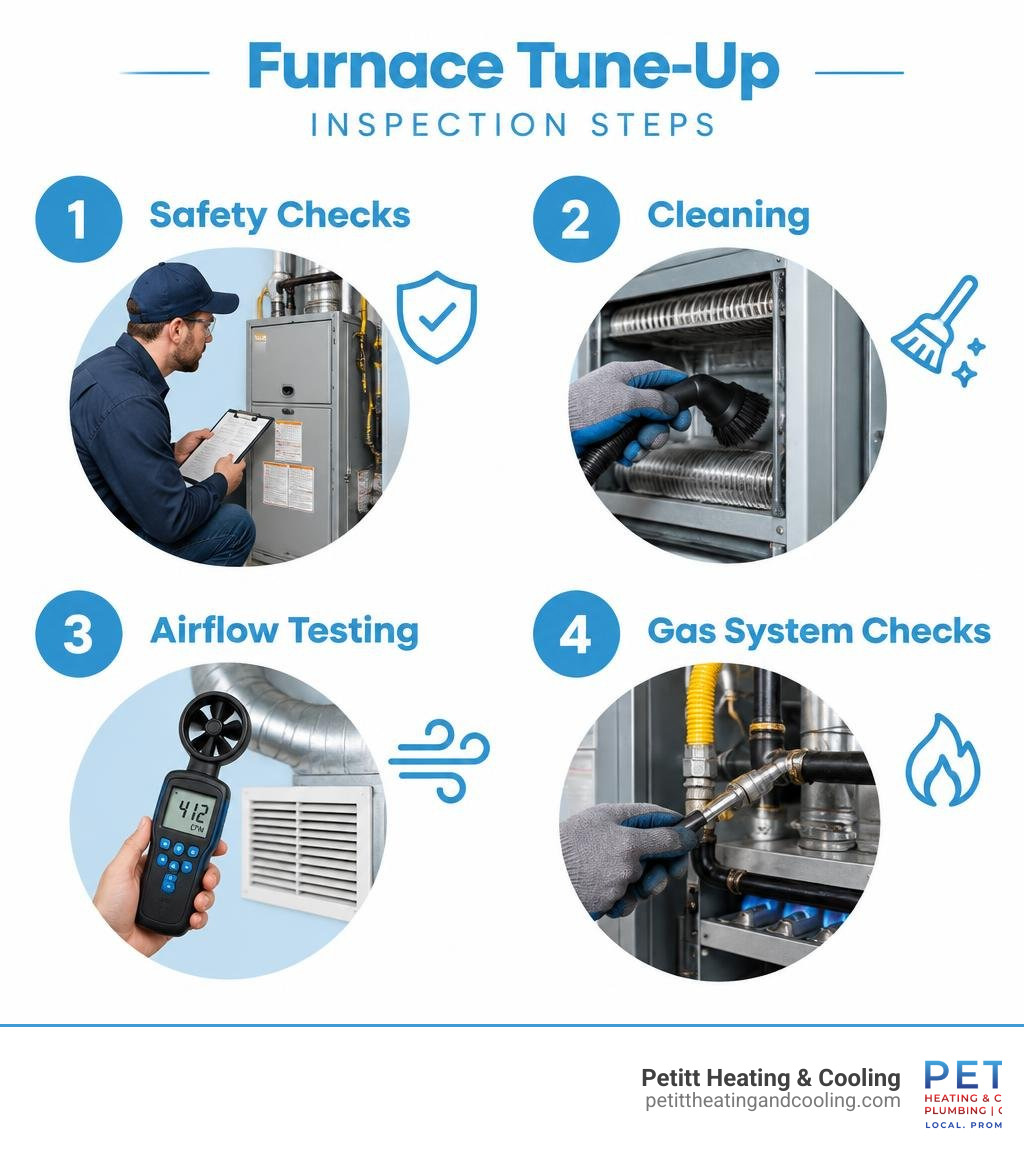
A furnace tune up is a professional service visit that checks whether the heating system is operating safely and reliably before winter. For a gas furnace, the visit typically includes:
- A visual safety check of the burners, venting, and heat exchanger
- Cleaning and inspection of key components, including the blower and flame sensor
- Airflow, filter, thermostat, and electrical-connection checks
- Testing to identify wear, unusual operation, or maintenance needs
The technician should explain what was checked, what looks normal, and whether any repair or follow-up is recommended.
Why the Details of a Furnace Service Visit Matter
A professional service visit is more than a quick look at the thermostat or a filter change. The technician checks the parts that affect safe operation, steady airflow, and reliable heating, then explains what looks normal and what may need attention.
The goal is simple: give you useful information about the system before it is working hard every day. A careful inspection cannot promise that a furnace will never break down, but it can help uncover wear, airflow problems, or safety concerns that are worth addressing.
Key Parts of a Professional Furnace Inspection
A thorough seasonal service visit is far more comprehensive than simply swapping an air filter and wiping away dust. Instead, our technicians follow a detailed checklist to evaluate internal combustion, airflow dynamics, and electrical stability. According to the official Maintenance Checklist from ENERGY STAR, comprehensive professional tune-ups should always address specialized gas and electrical connections alongside mechanical wear.
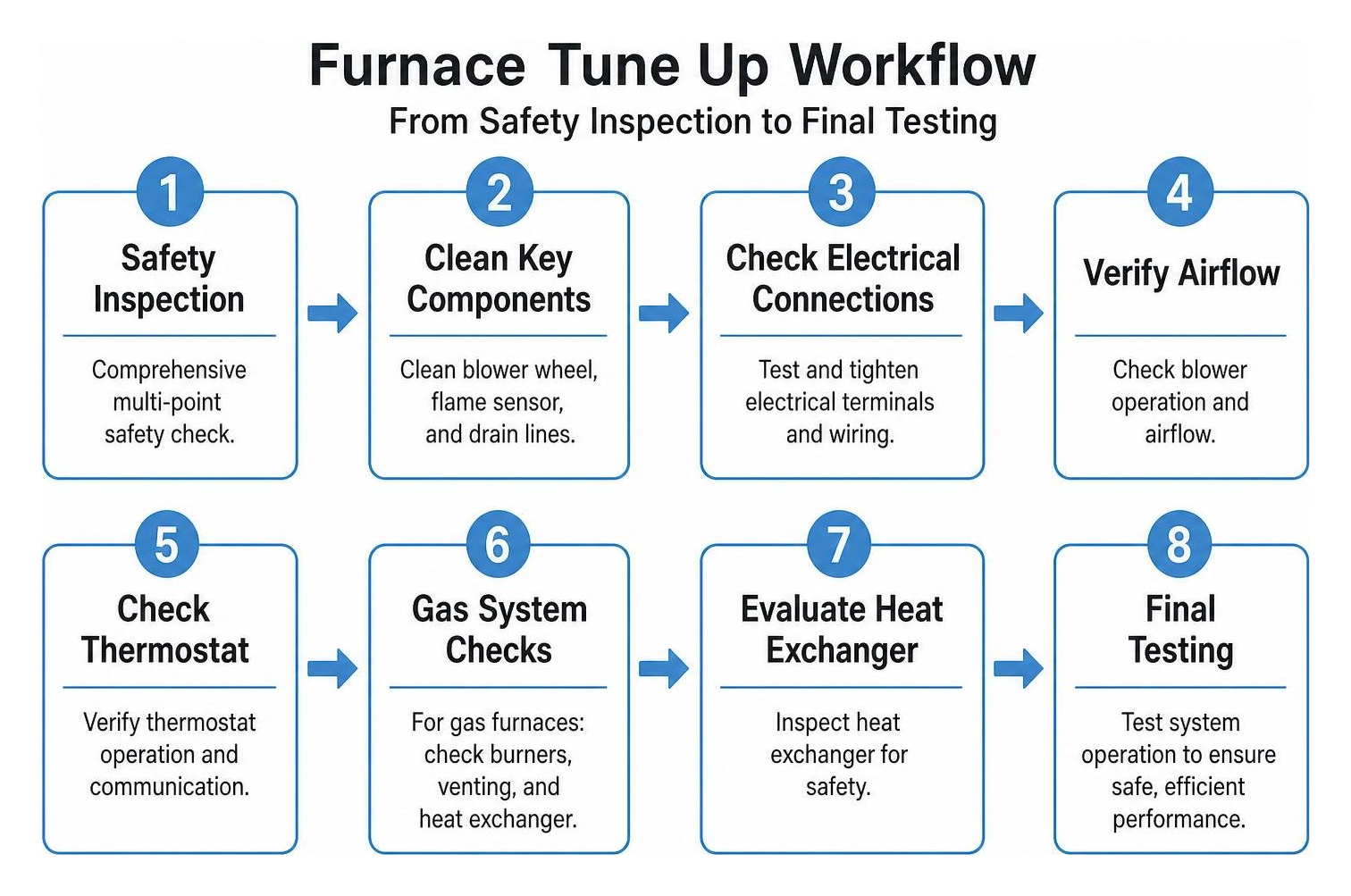
To help you understand the full process, we break our standard service visit into clear, methodical steps:
Comprehensive Multi-Point Safety and Mechanical Inspection
During the mechanical evaluation, we inspect the blower motor assembly and clean the blower wheel blades. Over time, dust accumulation on these blades creates drag, which can increase electrical draw and reduce home airflow. Furthermore, airflow restrictions from dirty blowers or blocked filters can reduce system efficiency by up to 15 percent.
Next, we test all electrical terminals, tighten loose wiring connections, and measure the run capacitor ratings against factory specifications. We also clean the flame sensor rod, which prevents the furnace from nuisance shutoffs caused by microscopic carbon buildup. Additionally, we check the drain lines on high-efficiency condensing units and verify smart thermostat communication to ensure your heating cycles remain balanced and accurate.
Critical Safety Checks in a Gas Furnace Tune Up

Safety is always the primary reason to schedule an annual heating inspection. Gas-fired appliances require precise fuel-to-air mixtures to burn cleanly and vent exhaust outdoors without risk to your household.
During our safety evaluation, we focus heavily on the following key areas:
- Heat Exchanger Integrity: We visually inspect the metal cells and use specialized cameras to look for hairline cracks, rust, or metal fatigue that could allow flue gases to mix with your indoor breathing air.
- Combustion and Carbon Monoxide Analysis: Technicians measure flue-gas carbon monoxide levels and draft pressure to verify that exhaust flows completely out of the chimney pipe.
- Burner Flame Diagnostics: We observe the burner ignition pattern to ensure steady, crisp blue flames rather than erratic, yellow-tipped flames that indicate incomplete combustion.
- Gas Pressure Calibration: We adjust the manifold gas valve to match the exact water column pressure ratings specified by the manufacturer.
Why Annual Heating Maintenance Matters for Efficiency and Longevity
Regular heating care produces immediate dividends in lower operating costs and dependable comfort. As furnaces run across cold seasons, soot, vibration, and normal wear steadily erode performance. Scheduling routine heating maintenance restores optimal operating conditions and eliminates unnecessary mechanical strain.
Restoring Lost Heating Efficiency and Lowering Winter Utility Bills
Without regular service, a gas furnace typically loses 1% to 3% of its combustion efficiency each year due to dirty burners, misaligned gas pressure, and restricted airflow. Fortunately, an annual system check can restore up to 5% in lost operating efficiency. By cleaning the burner ports and ensuring clean heat transfer across the exchanger, your system consumes less fuel while keeping every room comfortable. Applying practical Middle Tennessee winter HVAC tips alongside routine servicing helps keep your monthly utility expenses under control.
Extending Equipment Lifespan and Preserving Manufacturer Warranties
A properly maintained forced-air furnace can last between 15 and 30 years, whereas neglected units frequently suffer premature component failure after just a decade. In their practical guidance on seasonal furnace maintenance from This Old House, heating specialists compare skipping regular HVAC maintenance to driving a vehicle tens of thousands of miles without changing the engine oil.
Moreover, most equipment manufacturers require documented annual service to keep their factory parts warranties valid. Catching a weak capacitor or a slipping inducer motor during a scheduled visit prevents sudden breakdowns on freezing nights and spares you the expense of emergency repairs.
Essential DIY Maintenance Tasks vs. Professional Servicing
While licensed technicians handle high-voltage wiring, gas pressure gauges, and combustion analyzers, homeowners play an equally vital role in routine upkeep. Understanding which tasks are safe for DIY care—and which require specialized technical tools—keeps your home safe and your equipment running smoothly.
| Maintenance Task | Homeowner DIY | Professional Technician | Recommended Frequency |
|---|---|---|---|
| Inspect and Replace Air Filter | Yes | Yes | Check monthly; replace every 1–3 months |
| Clear Supply Registers & Returns | Yes | No | Monthly or as needed |
| Replace Thermostat Batteries | Yes | Yes | Annually or every 6 months |
| Test Carbon Monoxide Alarms | Yes | No | Monthly test; replace units every 5–7 years |
| Clean Burner Assembly & Flame Sensor | No | Yes | Annually during fall tune-up |
| Inspect Heat Exchanger with Camera | No | Yes | Annually during fall tune-up |
| Calibrate Manifold Gas Pressure | No | Yes | Annually during fall tune-up |
| Test Electrical Current & Capacitors | No | Yes | Annually during fall tune-up |
Routine Tasks Homeowners Can Handle Between Service Visits

Between professional visits, your primary responsibility is maintaining adequate airflow through the furnace. Check your return air filter every month and replace it promptly whenever a layer of dust coats the pleats. A severely clogged filter restricts airflow, which can cause the furnace to overheat and trip its primary limit switch.
Additionally, walk through your living areas to ensure that furniture, rugs, drapes, or pet beds do not block floor vents or wall return grilles. It is also good practice to test your household carbon monoxide alarms monthly to confirm their sensors and backup batteries are active.
Why Fall Is the Ideal Window for a Furnace Tune Up
The best time to schedule your heating service visit is early autumn, well before the arrival of the first hard freeze. During late summer and early fall, HVAC scheduling calendars are flexible, making it easy to book a convenient appointment time.
More importantly, scheduling early gives you plenty of time to address worn parts before cold weather places heavy daily demands on your system. Once winter storms hit, HVAC service companies experience surge volumes, which can lead to longer wait times for non-emergency calls.
Warning Signs Your Heating System Needs Immediate Attention
Even if you have maintained your furnace over the years, mechanical components eventually wear out. You should pay close attention to unusual changes in how your equipment starts, runs, and sounds. Recognizing the early signs heating system needs repair lets you fix problems before you find yourself dealing with an unexpected heating breakdown.
Call a qualified technician immediately if you notice any of the following warning signs:
- Yellow or Flickering Burner Flame: A healthy burner flame burns solid blue; yellow or dancing flames suggest improper fuel combustion and possible carbon monoxide generation.
- Heater Blowing Cool Air: If your registers discharge lukewarm or cold air while the thermostat calls for heat, your burners may be locked out or the safety switches have tripped.
- Frequent Short Cycling: When the furnace turns on and off rapidly every few minutes without warming the home, it often indicates an overheating heat exchanger or an airflow blockage.
- Rattling, Squealing, or Booming Sounds: Loud banging sounds at startup typically point to delayed ignition, while high-pitched squeals signal blower motor bearing failure.
- Unusual Odors: A slight dusty smell during the first startup of the season is normal, but persistent burning, electrical, or sulfur-like odors require immediate investigation.
Frequently Asked Questions About Furnace Maintenance
How much does an annual heating tune-up typically cost?
Professional furnace maintenance typically costs between $60 and $150 for a standard multi-point inspection and cleaning. The exact price varies based on system type, fuel source, equipment accessibility, and whether specialized diagnostic tests are required.
How often should a home heating system be serviced?
A combustion gas furnace should receive a professional service inspection once per year in the fall. In contrast, year-round heat pump systems require maintenance twice a year—once in the spring for cooling and once in the autumn for heating.
What is an HVAC maintenance plan, and is it worth joining?
An HVAC maintenance membership is a service agreement that covers your seasonal heating and cooling tune-ups automatically. These plans usually include perks such as priority dispatch during cold snaps, discounts on replacement parts, and waived diagnostic fees, making them cost-effective for most homeowners.
Can skipping heating service void my manufacturer equipment warranty?
Yes, many heating equipment manufacturers require proof of documented annual professional maintenance to honor warranty claims for major replacement components. If a heat exchanger or blower motor fails prematurely due to dirt buildup or improper gas pressure, the manufacturer may deny warranty coverage.
Conclusion
Taking the time to schedule an annual heating system check protects your equipment investment, lowers winter utility bills, and keeps your family safe and warm. Simple proactive maintenance eliminates the stress of unexpected mid-winter breakdowns. When you are ready to prepare your heating system for dependable cold-weather performance, request an appointment for seasonal heating service with our team at Petitt Heating & Cooling.