
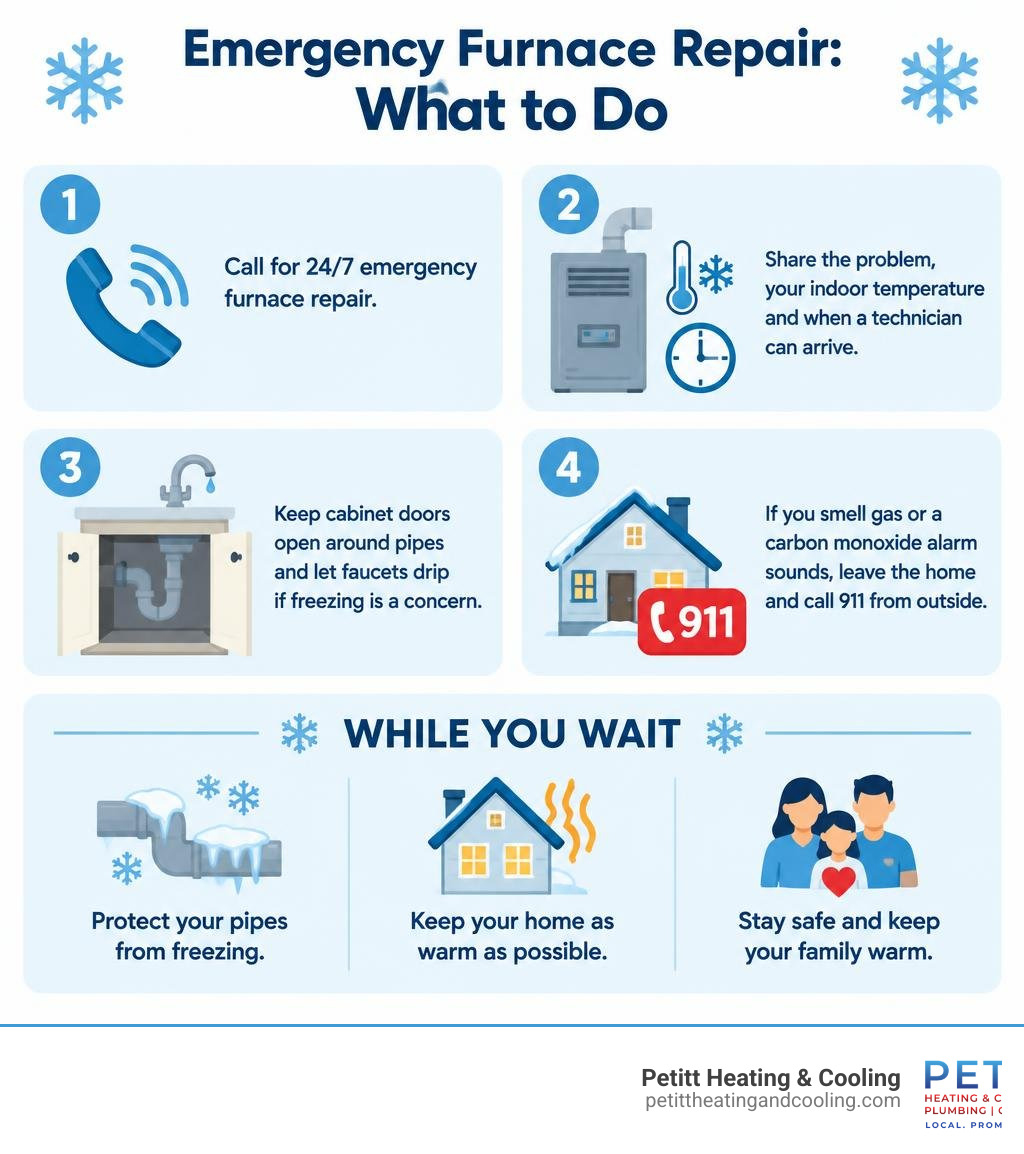
A furnace failure on a freezing night can put your home and pipes at risk. If you’re searching for 24 hour emergency furnace repair, call a local emergency heating service as soon as possible. Describe the problem, share your indoor temperature, and ask when a technician can arrive.
While you wait, keep cabinet doors open around pipes on exterior walls and let faucets drip if you’re concerned about freezing. Close exterior doors and windows to hold as much heat inside as possible. If you smell gas or a carbon monoxide alarm sounds, leave the home and call 911 from outside.
I’m Michael Petitt, owner of Petitt Heating & Cooling, and I’ve spent more than 30 years working in HVAC. I’ve helped homeowners through the same urgent problems that lead them to search for 24 hour emergency furnace repair near me. Below, I’ll explain what you can do while help is on the way.
Quick Answer: How Emergency Furnace Repair Stops Freeze Damage
When winter temperatures drop below freezing, indoor air can cool rapidly when the heat isn’t running. Calling for immediate assistance gives technicians a chance to restore heating before cold reaches vulnerable areas of the home. This is especially important for rooms with exterior walls, crawlspaces, or exposed plumbing.
Fast repair can help prevent water lines inside crawlspaces, basements, and cabinets from freezing solid and bursting. A prompt dispatch also helps protect drywall, flooring, and other areas that could be damaged by a pipe leak. Most importantly, it supports your family’s comfort and safety during severe weather.
How to Secure 24 Hour Emergency Furnace Repair Near Me Before Pipes Freeze
Finding the right local contractor during an urgent breakdown requires a clear, organized approach. Response windows can vary with weather, staffing, and local demand, especially during a widespread freeze. If you call early and share useful details, you’ll help the dispatcher assess the urgency of your situation.
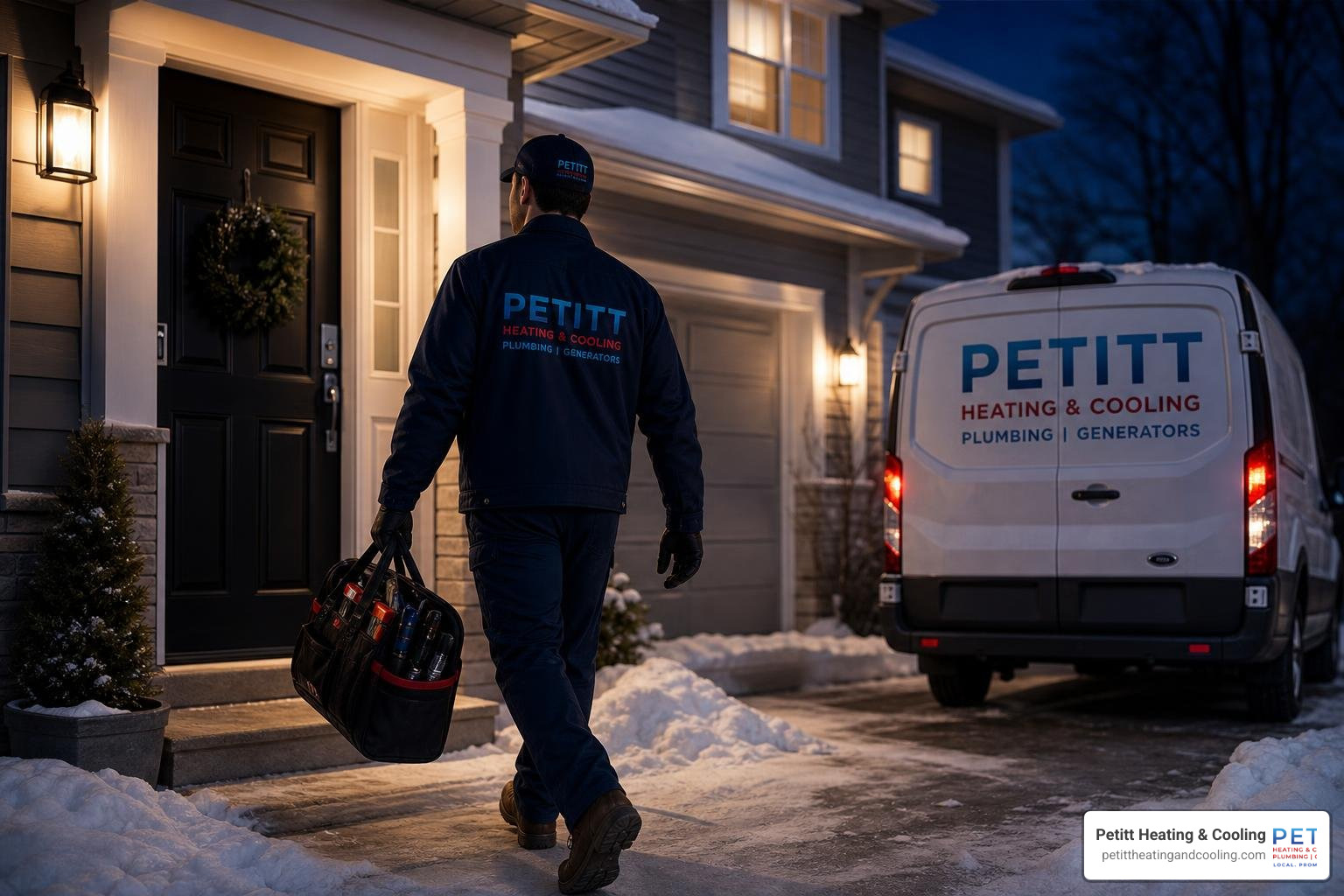
To get help as fast as possible, contact a trusted 24-hour emergency HVAC service right away. Give the dispatcher your address, furnace model type if you’ve got it, and the current indoor temperature. Clear information helps the team prepare for the call and route an appropriately stocked vehicle to your home.
Step 1: Evaluating if You Need 24-Hour Emergency Furnace Repair Near Me
Before placing the emergency call, perform a quick assessment of your heating system. Check the main electrical panel to see whether a circuit breaker tripped. Then confirm that the thermostat has fresh batteries and is set to “Heat.”
If the basic power settings look fine but your home is actively cooling down, watch for specific warning signals. A heater blowing cold air can point to a safety issue or a furnace problem that needs professional attention. Don’t keep restarting the system if it repeatedly shuts down.
- Is your heater blowing cold air continuously despite calling for warm air?
- Are you noticing sour, electrical burning odors or the scent of rotten eggs near the unit?
- Do you hear persistent grinding, screeching, or metal-on-metal rattling coming from the blower compartment?
- Has your furnace entered a hard safety lockout cycle and refused to restart?
Recognizing early signs that your heating system needs repair can help you act before indoor temperatures fall too low. A quick call can reduce the time your plumbing and household are exposed to freezing conditions. It also gives the technician a clearer picture of what’s happening before they arrive.
Step 2: What to Look for in 24-Hour Emergency Furnace Repair Near Me Services
When an urgent breakdown occurs, look for a certified professional who can handle complex heating issues safely. Qualified technicians understand safety interlocks, gas-pressure testing, and proper combustion-air venting. You can also ask about relevant state licensing and industry credentials, such as NATE certification.
Transparent pricing is equally important during an emergency. A reliable contractor explains dispatch fees, labor rates, and part-warranty coverage before beginning work. Confirm that your home is within the company’s standard service areas so a long trip doesn’t add unnecessary delays during severe weather.
Critical Furnace Warning Signs That Require Immediate Attention
Heating breakdowns during freezing conditions can create serious safety and property risks. Certain symptoms signal an immediate hazard that calls for turning off the unit and seeking professional help. If you’re unsure, prioritize your household’s safety over trying to troubleshoot a potentially dangerous furnace problem.
For example, a cracked heat exchanger can let odorless, poisonous carbon monoxide into living spaces. The NFPA Home Heating Safety Guidelines note that heating equipment is a leading cause of home fires and related safety incidents during winter. Burner flames should burn a clean blue, while flickering yellow or orange flames can indicate improper combustion.
| Furnace Symptom | Urgent Emergency Repair | Standard Scheduled Maintenance | Recommended Action |
|---|---|---|---|
| Yellow Burner Flame | Yes | No | Shut off unit immediately; inspect for carbon monoxide. |
| Complete Heat Loss Below Freezing | Yes | No | Request urgent heating repair to protect plumbing lines. |
| Slight Airflow Reduction | No | Yes | Replace the air filter and clean return grilles. |
| Electrical Burning Odor | Yes | No | Cut power at the breaker; check for wiring faults. |
| Occasional Minor Clicking | No | Yes | Schedule regular tune-up for aging ignitors. |
Step-by-Step Guide: What to Do While Waiting for Emergency Technicians
While a technician is traveling to your home, take practical steps to protect plumbing and retain heat. Small precautions can reduce the chance of property damage while you wait. Focus on safe measures that don’t require taking apart the furnace or using unsafe heat sources.
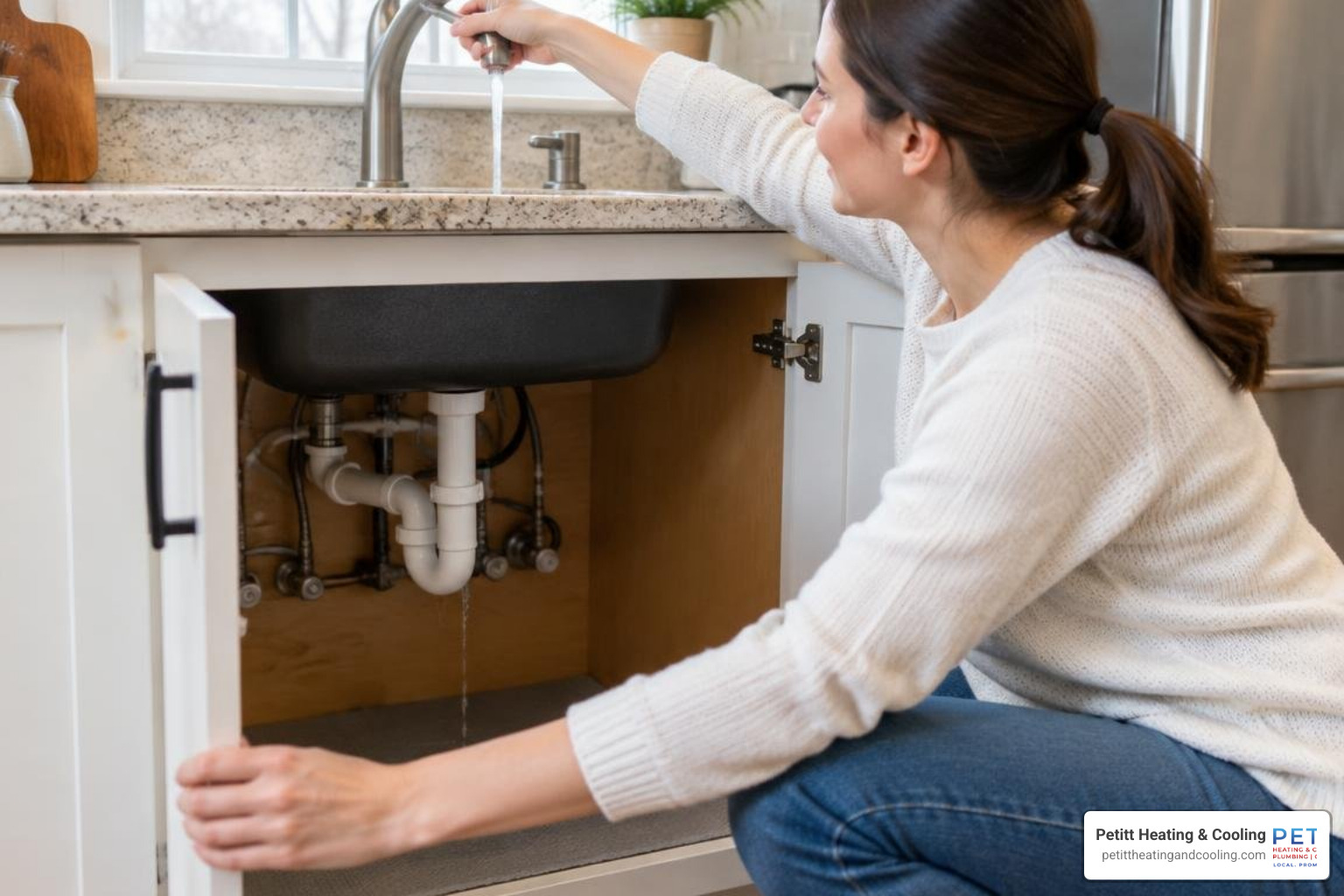
- Protect Interior Plumbing Lines: Open all vanity and under-sink kitchen cabinet doors to let warm room air reach uninsulated plumbing. Turn on sink faucets along exterior walls so they maintain a slow, steady drip, which relieves pressure and helps prevent ice plugs. If you know where the main water shutoff valve is, make sure it is accessible in case a pipe leaks.
- Safely Retain Room Heat: Close interior doors to unused bedrooms and seal base gaps with rolled blankets or draft stoppers. Keep window drapes drawn tight to reduce cold drafts. Avoid blocking supply vents in the rooms you’re using so warm air can circulate when the system restarts.
- Use Supplemental Heat Safely: The CDC Winter Weather Preparedness Guide warns never to use gas ovens, outdoor propane burners, or charcoal grills to heat living spaces because of carbon monoxide buildup. If you use an electric space heater, place it at least 3 feet away from bedding, curtains, and furniture. Plug the heater directly into a wall outlet and turn it off when you leave the room.
- Follow Local Cold Weather Advice: Use proven emergency heating tips to keep your household safer until the central system is restored. Check on older adults, young children, and anyone who may be especially sensitive to cold. Continue monitoring indoor temperatures and call for help if conditions become unsafe.
Understanding Emergency Furnace Repair Costs and Pricing Factors
Emergency furnace repair costs vary based on the underlying problem, needed parts, and age of the equipment. After-hours or holiday service can also affect the final price because it requires an urgent dispatch. Ask for an explanation of the expected charges and repair options before authorizing work.
Common repairs include replacing failed ignitors, cleaning dirty flame sensors, repairing blower motors, or diagnosing control-board problems. During a heating emergency in winter, older systems can present added challenges when replacement parts are discontinued or difficult to source. A qualified technician can identify whether a repair is practical or whether another solution makes more sense.
Furnaces near the end of their operational lifespan can be more vulnerable to unexpected failures during cold snaps. Obsolete parts and cracked heat exchangers may make a major repair less practical or less safe. In those cases, a full heating replacement may offer a more dependable long-term solution.
How Proactive Maintenance Prevents Emergency Heating Failures
Many emergency furnace calls begin with maintenance needs that could have been identified earlier. Systems work hardest during the coldest winter months, when small problems can become more noticeable. Regular service gives a technician an opportunity to spot wear before it turns into a no-heat emergency.
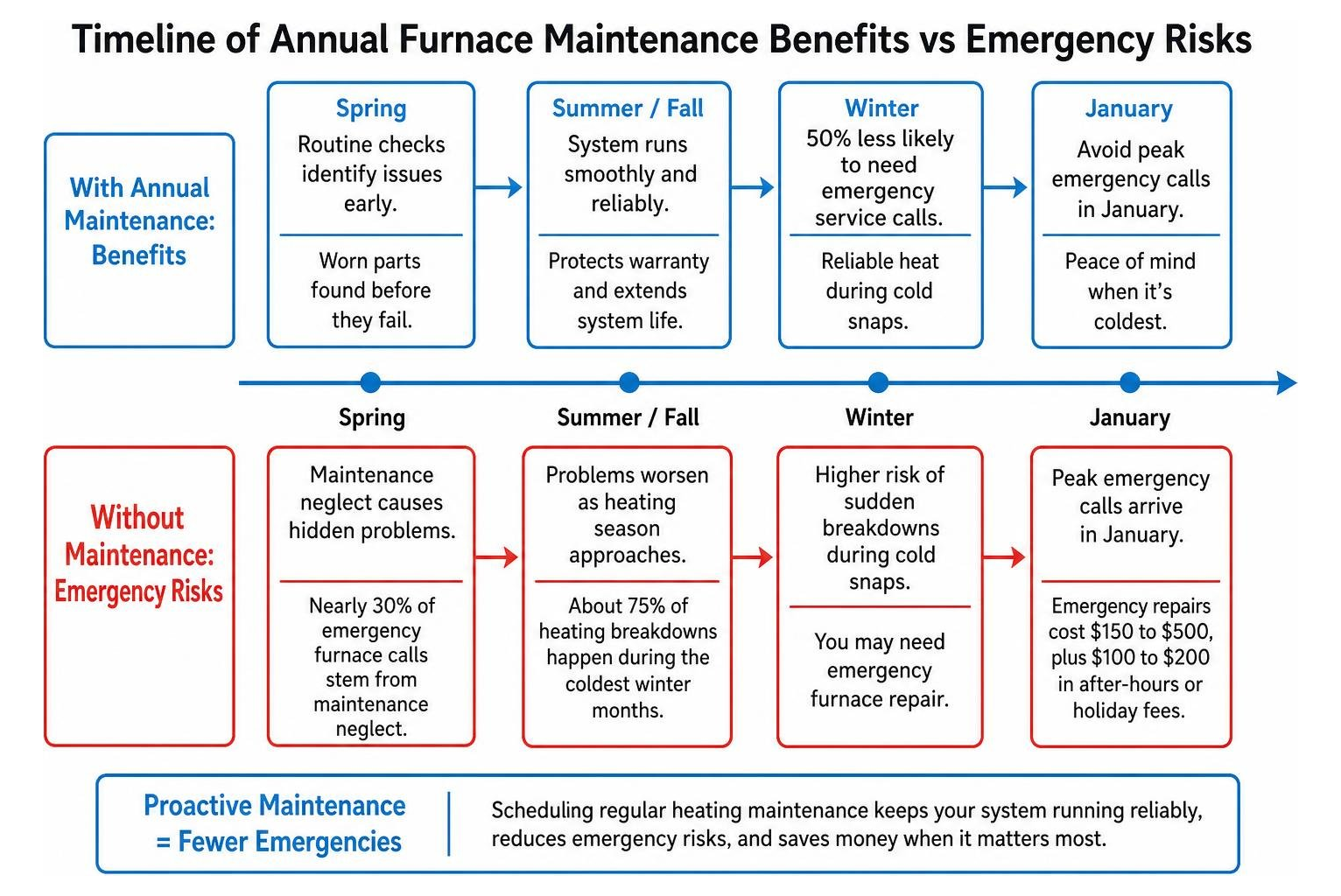
Scheduling regular heating maintenance helps keep equipment running smoothly and reliably. Annual tune-ups can uncover developing issues before severe weather places the system under heavy demand. They’ll also give homeowners a better understanding of their furnace’s condition and maintenance needs.
Routine checks can identify worn draft-inducer bearings, loose electrical connections, and dirty flame sensors before they fail. Addressing those issues early supports more reliable operation during heavy winter heating loads. Keeping your overall heating setup can also help protect equipment warranties and extend system life.
Frequently Asked Questions About Emergency Heating Services
At what indoor temperature are home water pipes at risk of freezing?
Pipes can freeze when indoor temperatures fall below 32°F. Uninsulated lines in exterior walls, crawlspaces, or basements can become vulnerable sooner when outdoor temperatures are extremely low. Keeping cabinet doors open and allowing faucets to drip can help delay freezing while you’re waiting for emergency heating repair.
Should I keep restarting a furnace that repeatedly shuts off?
No, repeatedly resetting a modern furnace can create additional safety concerns. If your system shuts down on a safety lock, leave it off rather than forcing another restart. Call a certified technician to inspect the cause of the shutdown.
Can emergency furnace repair be completed in one visit?
Many standard furnace repairs can be completed in one visit because technicians often have common parts in their service vehicles. Examples include hot-surface ignitors, flame sensors, run capacitors, and pressure switches. Rare proprietary control modules or older heat exchangers may require temporary heating measures while replacement parts are obtained.
What should I do if I suspect a water pipe has already frozen?
Leave the faucet open and keep under-sink cabinets open to let indoor heat reach the pipe. Never use an open-flame blowtorch to thaw a line because it could damage the pipe or start a fire. If you see split pipe walls or dripping joints behind drywall, shut off the home’s main water valve and call a licensed plumber.
Protect Your Home With Fast, Reliable Heating Service
A furnace breakdown during freezing weather can quickly threaten your home’s plumbing and your family’s comfort. Acting quickly can keep a mechanical problem from becoming a burst-pipe emergency. Safe temporary measures and professional service can work together to reduce the risk of freeze damage.
Petitt Heating & Cooling provides local homeowners with round-the-clock emergency assistance. The company also offers a 24-hour priority response if a system it installed fails, a $500 installation guarantee, and a 10-year parts-and-labor warranty on new installations. Help prevent winter heating emergencies with professional HVAC maintenance plans.
Contact Petitt Heating & Cooling today to schedule emergency furnace repair. A technician can assess the problem and recommend the safest next step for your home. You can also schedule a seasonal heating tune-up to help prepare your system for the next cold spell.