
You’re winding down for the night when the house suddenly feels chilly. Or it’s a hot Middle Tennessee weekend, the AC is on, and the rooms keep getting warmer anyway.
In that moment, you need to know one thing: can this wait until morning, or is it time to call for 24 hour emergency HVAC service?
For more than 30 years, Petitt Heating & Cooling has helped Middle Tennessee homeowners through after-hours breakdowns. Below, we’ll help you sort out what needs immediate attention, what to do while you wait, and when to reach out.
Quick Answer: What to Do During an After-Hours HVAC Emergency
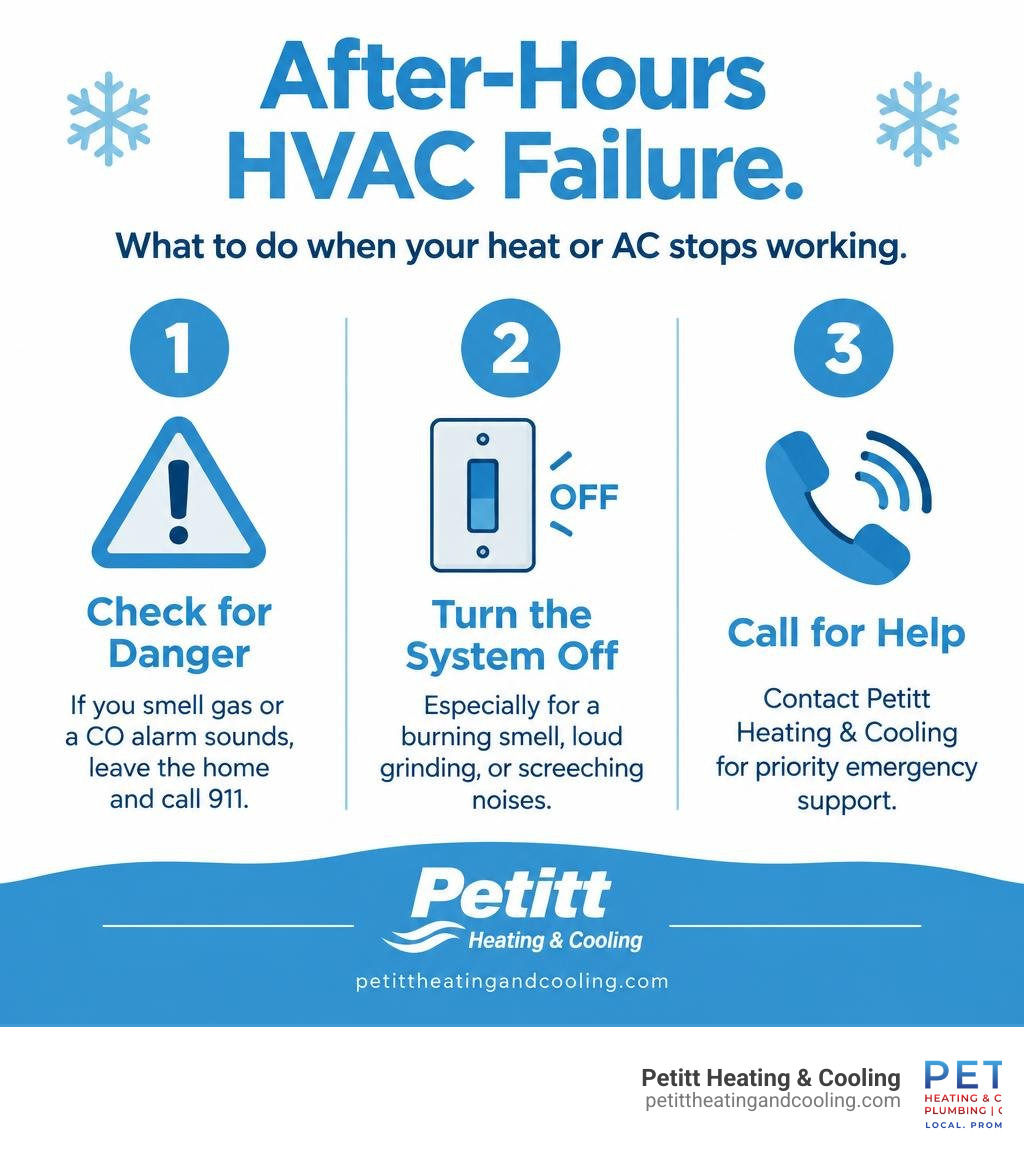
If your heat or AC goes out late at night or over the weekend, here’s what to do first:
- Decide whether it is urgent. Treat immediate safety concerns, serious home-damage risks, and a total loss of heating or cooling in dangerous weather as after-hours problems.
- Make the equipment safe. If the system shows signs of an electrical or mechanical problem, turn it off and avoid restarting it.
- Limit discomfort and damage. Use the practical steps below to protect your home and stay as comfortable as possible while help is on the way.
- Call when the problem cannot wait. Petitt Heating & Cooling offers a 24-hour priority response commitment if the primary system we installed in your home fails.
Not sure whether the issue needs an after-hours call? These common HVAC repair signs can help you decide.
Identifying True Emergencies: When to Request 24 Hour Emergency HVAC Service
An after-hours call isn’t necessary for every little HVAC issue. A slightly stuffy guest room or a light rattle from the unit is usually something you can schedule during normal business hours.
A real emergency is different. It involves an immediate safety concern, a risk of serious damage to your home, or a complete loss of heating or cooling during dangerous weather.
When Extreme Weather Makes an Outage Urgent
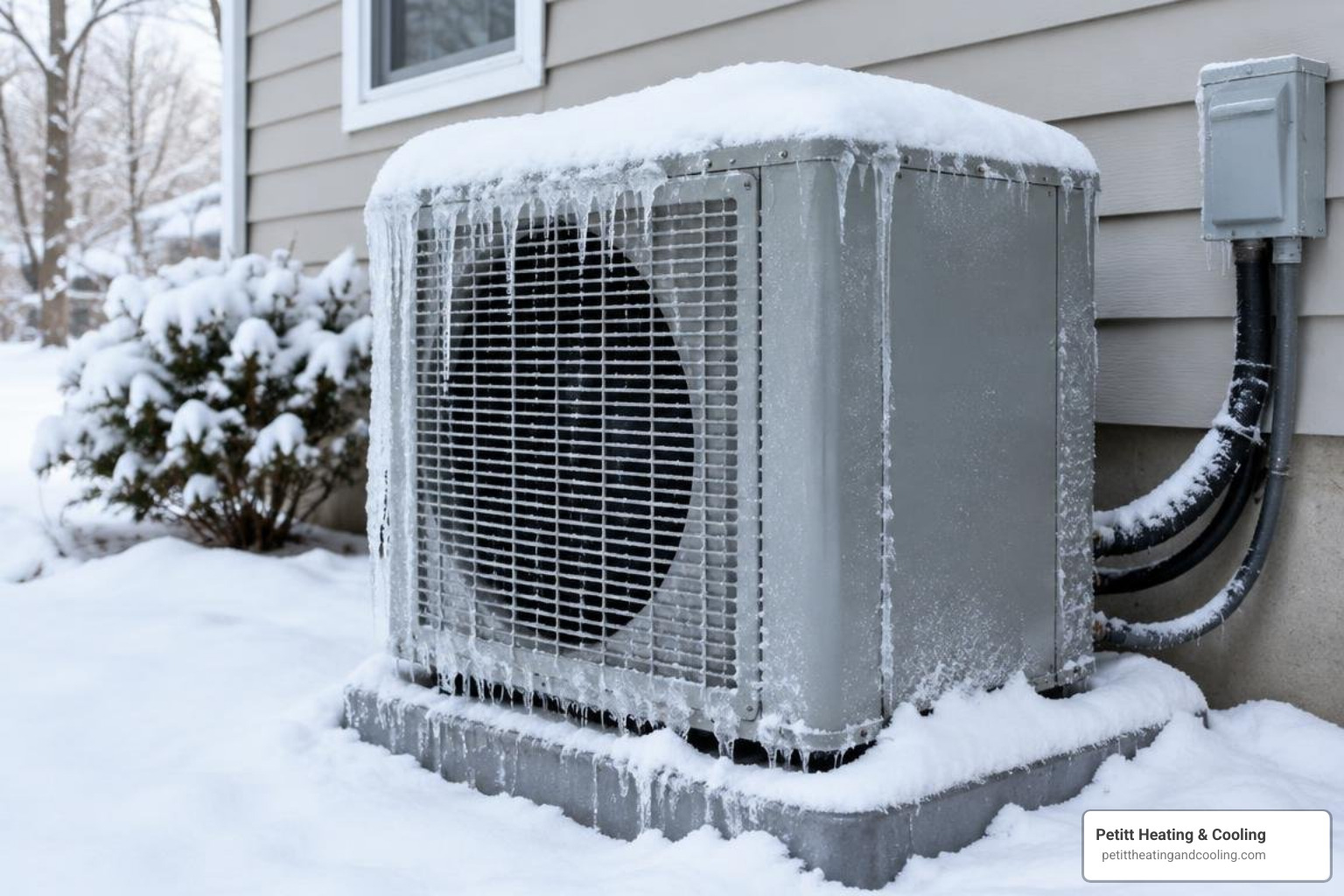
Middle Tennessee weather can change quickly. On a freezing night, indoor temperatures can drop faster than you might expect, especially in homes with babies, older family members, or pets.
The same is true when the heat is intense. A home can warm up quickly during a heat advisory, and concerns about combustion or exhaust should never be put off. The CDC’s Carbon Monoxide Poisoning Basics explains why issues such as a cracked heat exchanger or blocked vent need prompt attention.
Critical Winter and Summer System Failures
Some full-system failures are more urgent than others:
- No heat during freezing weather: A heat pump may have an iced outdoor coil, a stuck reversing valve, or failing auxiliary heat. A gas furnace may shut down because of a dirty flame sensor or faulty pressure switch. If you wake up to a heater blowing cold air, it’s worth getting help sooner rather than later.
- No cooling during dangerous heat: A failed compressor or fan motor can leave you with an AC not blowing cold air when you need relief most. A clogged airflow path or refrigerant problem may also cause the indoor coil to ice over. Getting professional AC repair quickly can sometimes prevent a smaller repair from becoming a compressor replacement.
Warning Signs That Mean You Should Shut the System Down
Turn the equipment off and call for help if you notice any of these warning signs:
- Harsh noises from the equipment: A squeal, bang, or grinding sound can signal trouble with a moving part. If your HVAC is making noise, switch it off rather than letting the problem get worse.
- Burning smells: An acrid smell, like burning plastic or hot wiring, may mean electrical parts are overheating.
- Water where it shouldn’t be: If a clogged drain line causes your AC to leak water indoors, turn the system off to help limit damage to floors or ceilings.
Immediate Action Steps Before Your Technician Arrives
Once you’ve decided the problem needs attention, focus on keeping everyone safe and making the home easier to work in when help arrives.

Start With the Safety Basics
Start by shutting the thermostat down. If there’s a burning odor, a grinding sound, or water spilling from the drain pan, turn off power to the unit at the breaker as well. Leave it off until a technician checks it. In the meantime, these emergency heating tips can help keep the house more comfortable.
Keep Your Family Safe and Prevent Home Damage
A few simple steps can make a stressful situation more manageable:
- Watch for short cycling. If the furnace starts and stops every few minutes, don’t keep trying to run it. HVAC short cycling can put extra strain on the system and overheat the heat exchanger.
- Protect pipes during freezing weather. Open cabinet doors under sinks on exterior walls so warm air can circulate, and let faucets drip slowly. Review what to do if pipes freeze so you’re ready to protect your plumbing.
- Use space heaters carefully. Keep them at least three feet from curtains and furniture, plug them directly into the wall, and turn them off before leaving the room or going to sleep.
Make the Work Area Easy to Reach
Before the technician arrives, take a minute to:
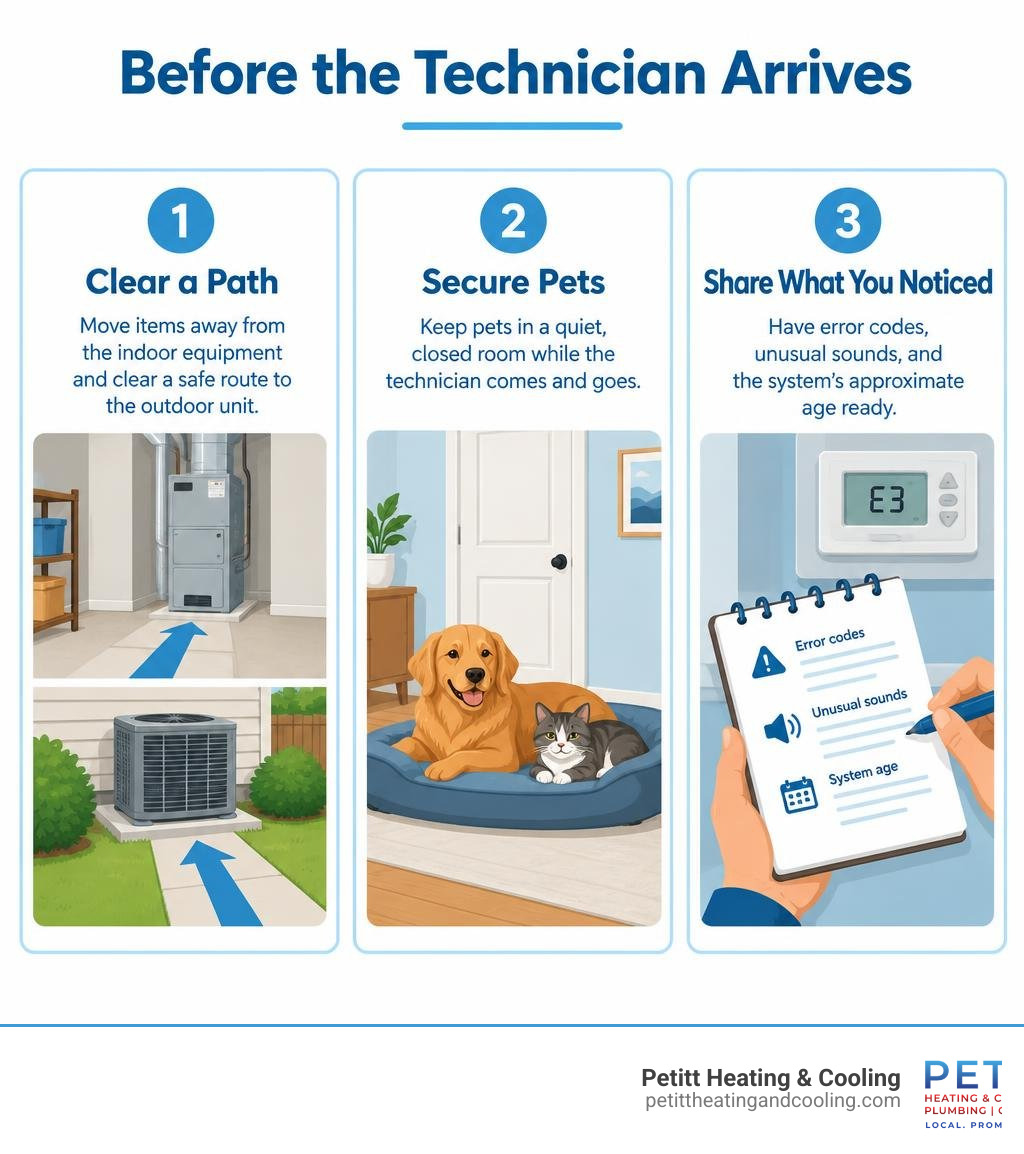
- Move boxes, baskets, and other items away from the furnace or air handler.
- Clear a safe path to the outdoor unit, especially if there’s ice, snow, or overgrown shrubs nearby.
- Put pets in a quiet, closed room so they stay settled while the team is coming in and out.
A little prep helps our technician get right to work when they arrive, so your emergency heating repair can get done sooner.
How Our Emergency HVAC and Plumbing Response Works
When you call Petitt Heating & Cooling for emergency support, the goal is simple: figure out what’s going on, help you handle any immediate safety concerns, and get the right technician headed your way.
The technician arrives with the diagnostic tools and common replacement parts needed to start narrowing down the problem right away. Homeowners across our service areas can expect clear answers, careful work, and practical advice about the next step.
What We Check During an Emergency Visit
Once we’re at your home, we look for the real cause of the issue instead of guessing. That can include:
- Electrical checks to look at voltage, motor amp draws, and capacitor ratings.
- Airflow checks to spot restrictions in the blower, coils, or duct connections.
- Refrigerant checks for signs of a leak or a failing expansion valve.
- Combustion and safety checks to inspect the heat exchanger, exhaust draft, and safety switches.
If the outage leads to a plumbing problem, our residential plumbing services can help with frozen pipes, condensate clogs, and water-heater concerns.
Looking Beyond Tonight’s Repair
An emergency repair can get the system running again, but it’s also a good time to talk about what caused the problem and what may help prevent another surprise later on.
When an older system needs a major repair, replacement may be the better long-term choice. Our financing options can help make that decision easier on the monthly budget.
Emergency HVAC Service Questions Homeowners Ask
What information should I have ready when I call for emergency HVAC service?
Have your system type, the problem you noticed, any thermostat error code, and the approximate age of the equipment ready if you know it. This information helps the dispatcher understand the situation and helps the technician begin diagnosing the issue when they arrive.
Do I need to be home for an emergency HVAC visit?
An adult who can provide access to the equipment and explain what happened should be available for the visit. Clear communication about the symptoms, recent changes, and system history can help the technician diagnose the issue more efficiently.
Can an emergency HVAC repair be completed the same night?
Many emergency HVAC repairs can be completed during the visit when the problem is identified and the needed part is available. If the repair requires a specialty part or more extensive work, the technician can explain the safest next step and the repair plan.
What happens if my HVAC system needs a major repair?
The technician will explain the cause of the failure, the repair options, and whether a replacement should also be considered. For an older system with a costly repair, reviewing the expected reliability and long-term cost can help you make an informed decision.
Should I schedule maintenance after an emergency HVAC repair?
Yes, once the immediate repair is complete, routine HVAC maintenance can help identify wear, airflow problems, and drainage issues before they become another unexpected breakdown. Ask the technician which follow-up service makes sense for your system.
Conclusion
An after-hours HVAC problem can feel overwhelming, but a clear next step makes it easier to respond. Once you have addressed any immediate safety concern, focus on protecting the home, preparing access to the equipment, and sharing useful details with the technician.
If the primary system we installed in your home fails completely, Petitt Heating & Cooling guarantees a technician at your door within 24 hours. Schedule emergency HVAC service with Petitt Heating & Cooling so a technician can diagnose the issue, explain the repair options, and help restore comfort to your home.